AI English speaking practice means talking out loud to software that hears you, names what was wrong, and shows you the sentence a fluent speaker would have used. Four jobs make that useful: hear you, correct you, remember the mistake, bring it back days later. Most apps do the first two and stop. That is why a month of pleasant conversation with a chatbot can leave your English exactly where it started, and why the app you choose matters more than the hours you put into it.
What does an AI speaking coach actually do when you talk to it
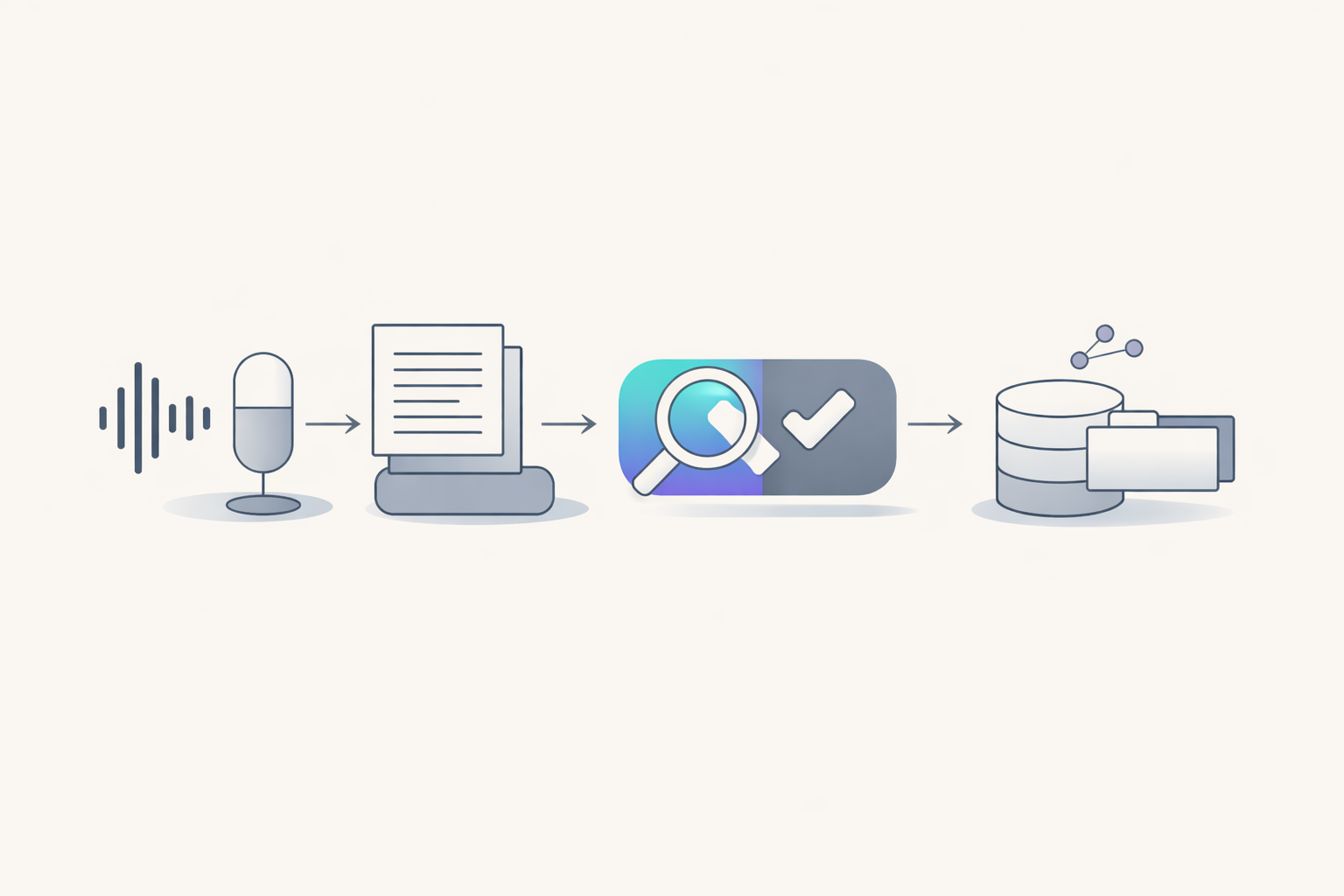
Your sentence passes through a chain, and each link is a separate piece of engineering. First, automatic speech recognition turns your audio into text. Then a language model reads that text, decides what is wrong, writes the corrected version and explains it. Then text-to-speech says the corrected sentence back, so your ear gets the right pattern and not only your eye. Any app can ship these three parts and call itself a coach.
The fourth part is different. Memory is not a property of the chat model; it is a database of your errors plus a scheduler that decides when to test you again. A chat model starts each conversation with no record of the mistake you made on Tuesday unless someone built that record. This is why the same error can be corrected politely five weeks in a row, and stay.
Two-Minute Speaking, the app this site publishes, runs the chain in a fixed loop. It takes a scenario from your own life and asks the question in your first language. You answer by voice or text, it corrects what you said, teaches exactly one point, and shows you the version a native speaker would use. One point per session is a deliberate limit, not a shortcut. You can read the full mechanics in how Two-Minute Speaking works.
Can an AI really hear your accent or is it guessing
Speech recognition hears you better than it did three years ago, and worse than it hears a news presenter. In a benchmark of five speech recognition systems on non-native English from six first-language backgrounds, the two most accurate systems reached mean Match Error Rates of 0.054 and 0.056 on read speech. On spontaneous, unscripted speech the best system managed 0.063, and error rates climbed with filler words, repetitions and self-corrections. Read-aloud drills are the easy case. Real conversation, which is what speaking practice is, is the harder one.
Your first language shapes where it breaks. Persian has no /w/ sound, and writes both sounds with و, so “I want” can come out as “I vant” and be transcribed as a different word entirely. When that happens, the correction you get back is a correction of a sentence you never said. More examples of this are in pronunciation mistakes Persian speakers make.
Pronunciation scoring is the weakest link of all. A recent study comparing generative-AI scoring against human raters found the AI assigned significantly higher scores than human raters across all subcomponents, and that it “tended to give similar scores to those with weaker pronunciation, failing to capture fine-grained qualitative distinctions”. In plain terms: it is generous, and it cannot reliably tell two struggling speakers apart.
Warning
Treat any AI pronunciation score as encouragement, not measurement. And always look at the transcript. If the app will not show you what it heard, you cannot tell a real correction from a repair of a misheard word.
Why chatting with an AI does not fix your English
A conversation partner that never stops you is pleasant and nearly useless. Every minute you speak without correction is a minute you rehearse the sentence you already say wrong. Second language researchers are unusually united here. A systematic review of corrective feedback reports that there has been a consensus that CF is beneficial to L2 learning, even while the field still argues about the best moment to deliver it.
Timing leans one way. Among the studies the same review compared, immediate feedback often outperformed delayed feedback, and the review concluded that immediate feedback was more effective or equally effective than delayed. So correction that lands right after you speak is the defensible design. Correction that arrives as a summary email on Friday is not.
Be careful with the opposite claim, though. No study I could find measures damage caused by the absence of feedback, so “chatting fossilises your errors” is an overstatement. The honest version is narrower and still decisive: feedback has documented benefit, and an app that skips it is skipping the part researchers agree helps. A model tuned to keep you talking will praise a sentence it should have stopped.
The four things an AI speaking app has to do
Forget brand rankings and ask which of four layers an app actually implements. This is the buying criterion, and it takes one session to check.
| Layer | What it does | The question that tests it | How common |
|---|---|---|---|
| Hear | Turns your speech into a transcript | Can I see what it heard, word for word | Almost every app |
| Correct | Names the error and gives the better sentence | Does it stop me, or only reply | Common, quality varies widely |
| Remember | Stores that error as a specific named item | Does it have a list of my mistakes | Rare |
| Schedule | Brings the error back on a later day | Did yesterday’s mistake reappear today | Very rare |
Layers one and two are a weekend of engineering with off-the-shelf models. Layers three and four need a per-learner database, a scheduler and a deliberate teaching order, which is why most apps stop at conversation. Two-Minute Speaking keeps layers three and four in an error ledger with six categories: grammar, vocabulary, nativeness, pronunciation, writing and discourse. Each entry is one specific named thing, such as a missing article, not a vague “grammar” score.
How an app remembers the mistake you made last Tuesday
Memory in a language app means a scheduler, and the open one worth knowing is FSRS. Its repository describes it as a spaced repetition algorithm based on DSR model that runs entirely locally. DSR stands for difficulty, stability and retrievability. Stability is “the storage strength of memory; the higher it is, the slower it is forgotten”. Retrievability is your current chance of recalling the item, and the FSRS schedule returns an item just as that chance starts to fall.
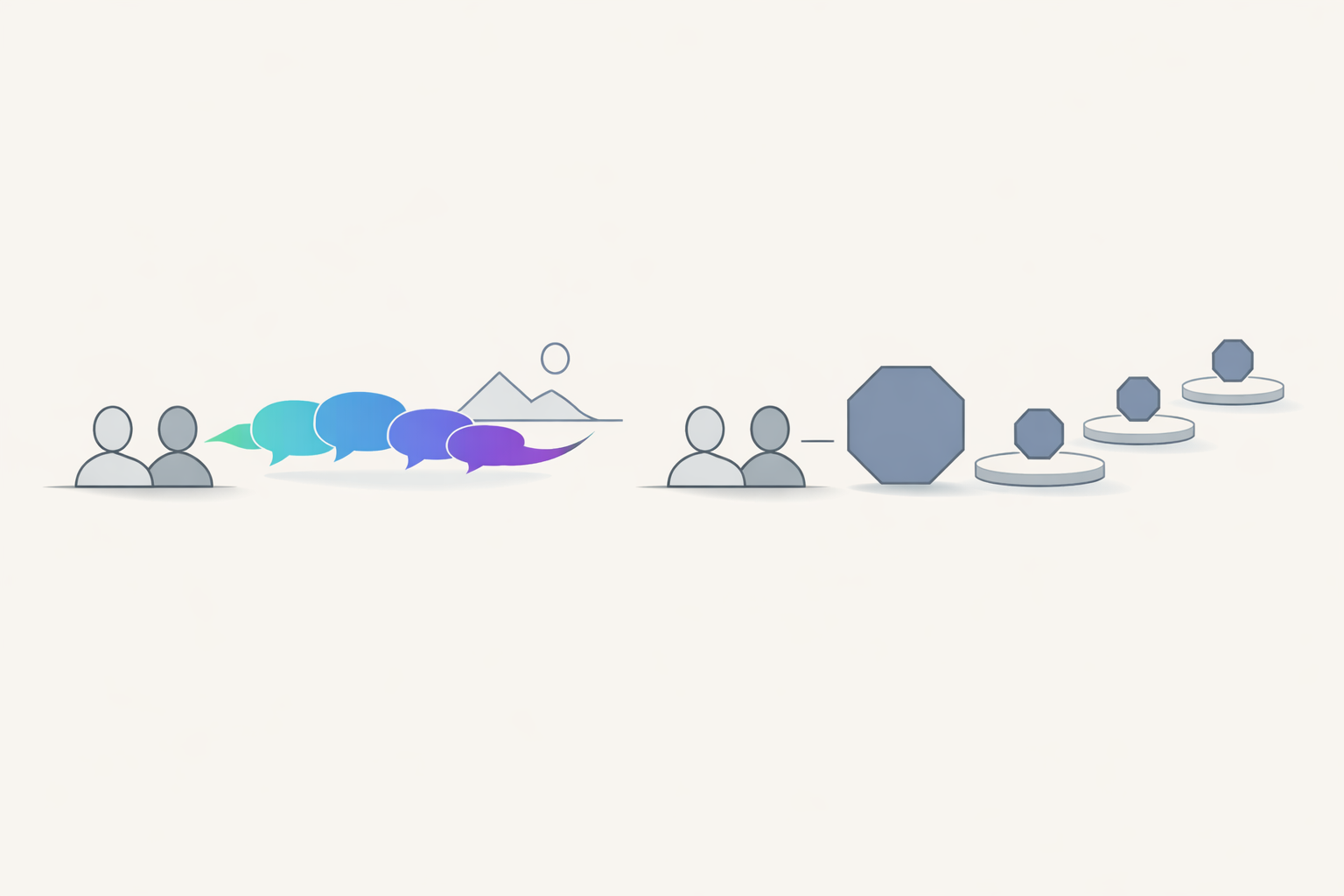
Here is what that looks like as a product rule. In Two-Minute Speaking, an error closes only after you use it correctly N times across N separate sessions on separate days, scheduled by FSRS. The default is three; you can set it anywhere from one to ten. At most three concepts stay open at once, because a learner who is working on nine things is working on nothing.
Note
Three is a design choice, not a measured threshold. Two-Minute Speaking has no published outcome data, and pronunciation scoring is on its roadmap rather than in the product today. Judge it on the mechanics you can see, exactly as you should judge any other app.
Ten minutes that tell you if an app is worth paying for
You do not need to trial five apps for a month each. Run these six checks in one session plus one short visit the next day. Three or fewer passes means keep your money.
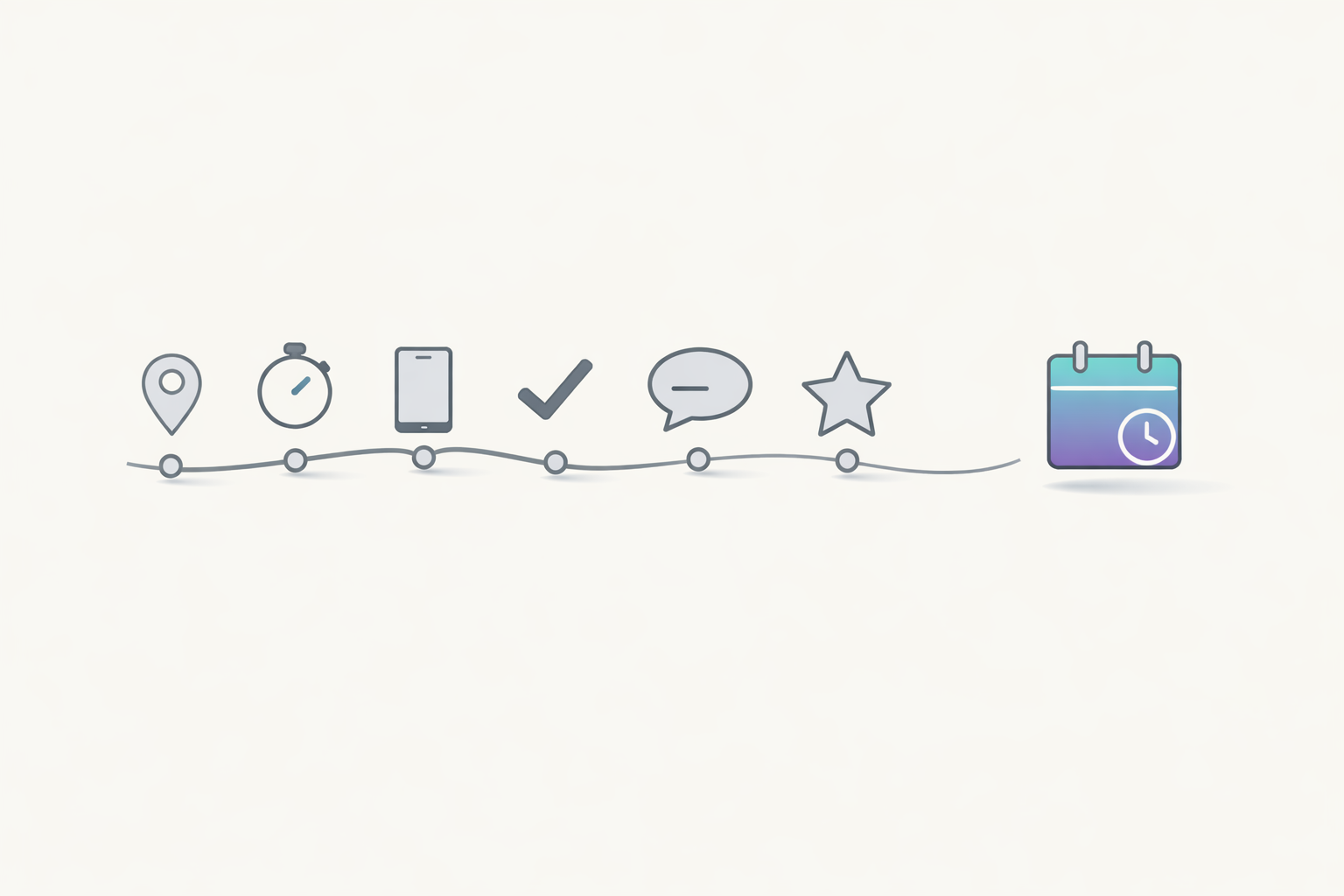
- The deliberate mistake. Say something you know is wrong, such as “I have problem with my manager”. If the app answers the content and never touches the missing article, it is a conversation toy.
- The transcript. Find what the app heard, word for word. If it is hidden, every correction you get is unverifiable.
- The one point. Count the corrections in one session. Five at once is a report card, not teaching; you will remember none of them.
- The first language. Check whether the explanation is available in your own language. Grammar explained in the language you are failing at is a second puzzle on top of the first.
- The exit. Look for your own error list, visible and ideally exportable. If your mistakes are not a list you can see, they are not being tracked.
- The return, tomorrow. Open the app again the next day and wait. If yesterday’s error does not come back on its own, there is no scheduler behind the friendly voice.
Tip
Run check six first thing tomorrow, before you speak. A real scheduler brings the item to you. An app that waits for you to raise the subject has quietly made you the memory layer.
When a human tutor still beats any AI
A person interrupts you in ways software does not. They frown when a sentence lands wrong, ask what you meant, and make you rebuild the thought under mild social pressure. That repair work has a name in second language research. Long’s Interaction Hypothesis holds that modified interaction, when combined with modified input, facilitates second language acquisition more efficiently than modified input alone. A meta-analysis found interaction with negotiation of meaning produces large positive effects on acquisition compared with no interaction, including on delayed tests.
Note what that evidence is and is not. It supports human interaction; it is not a head-to-head trial of an app against a tutor, and no such trial turned up in this research. Two groups should not rely on an AI app alone. Beginners who cannot yet produce any full sentence need a patient human first. Anyone facing a rated exam or a hiring panel needs rehearsal with a real listener, which is the thinking behind speaking practice for a job interview.
The sane combination is boring and it works. Use the AI for the daily repetitions nobody will sit through with you, at midnight, for the tenth time on the same missing article. Use a human for pressure, for nuance, and for the moment you have to be understood or lose something. If neither is available today, there are still ways to practise English speaking alone.
How to start today without downloading five apps
Pick one app and give it one honest week. Start with a placement session so the tool has some idea of your level. Two-Minute Speaking estimates your CEFR level this way, and lets you choose an American or British target, how many sessions a day you want, and when the reminders arrive. It runs in the browser at app.aienglishspeaking.app and installs to your home screen on iPhone and Android as a progressive web app, with native apps planned.
Then keep the sessions short enough to survive a bad day. One question, one correction, one reuse is the whole shape of a two-minute daily routine, and it beats a heroic hour you do twice and abandon. A realistic first-week result is one named error closed, not a transformation. If the freezing itself is the problem rather than the grammar, read why you freeze when you speak English before you blame the app.
Questions people ask before they pay
Can AI really correct my English speaking, or does it only chat with me? Both exist, and they look identical on a screenshot. A plain chat model converses and tends to accept fluent-sounding sentences, while an app with a separate correction step names the error and gives you the better version. Since corrective feedback is broadly supported in second language research, an app that only chats is skipping the step that does the work.
Do AI speaking apps understand a strong accent? Mostly, and better on scripted speech than on free talk. The benchmark above put the best systems near 0.054 Match Error Rate when non-native speakers read a text, and error rates rose on spontaneous speech full of hesitations. Expect an occasional misheard word in real conversation, and check the transcript when a correction looks strange.
Is an AI pronunciation score trustworthy? Not as a measurement. The recent comparison against human raters found AI scoring systematically more lenient and poor at separating weaker speakers from each other. Use the score to track your own trend over weeks, and never as evidence that your pronunciation is ready for a test.
How long should I practise speaking with an AI app each day? Long enough to speak, short enough to repeat tomorrow. Two focused minutes daily beats forty minutes on Sunday, because a scheduler needs separate days to work with, and because a habit you can keep on a bad day is the only habit that lasts.
Is an AI speaking app enough for an IELTS or job interview speaking test? Not on its own. An app is good at the repetitions that fix specific errors, and no current app documents reproducing the pressure of a live examiner or hiring panel. Use the app for the daily reps, and book at least a few rehearsals with a human before the day itself.
Run the ten-minute test on whatever app you are considering, including this one. Two-Minute Speaking starts with a placement session, so open the app and run a placement session and you will know inside one session whether it corrects you or flatters you.
Leave a Reply