

You are standing beside your car after work, phone in your hand, and daily English speaking practice is still the thing you meant to start on Monday. The unit that matters is one spoken attempt at one specific thing, not the length of the session. In two minutes you can answer a real question out loud, hear one correction, and say it again. Daily, that is seven spaced attempts a week; twice-weekly fifteen-minute sessions give you two.
What can you actually do in two minutes of speaking practice?
One thing, completely. A two-minute session holds one question answered out loud, one correction, and one reuse. It is a rep, not a lesson.
The question comes from your own week: what did you do at work today? You answer out loud, unscripted. “Today I had a meeting with the new client. I am working with them since March.” Listen back and one thing stands out: English wants the present perfect, so it becomes I have been working with them since March. Say the fix twice, then the whole answer again.
Producing the sentence yourself before you check it is what does the work. In a study of foreign vocabulary learning, retrieval practice outperformed imitation on both immediate and delayed tests of spoken production. Speaking first, correcting second, is the point.
If no sentence comes out at all, that is a different problem: why your sentence stops halfway.
Is fifteen minutes a day better than two?
Fifteen minutes a day beats two minutes a day. Fifteen minutes on the two evenings you actually have free does not, and that is the real comparison.
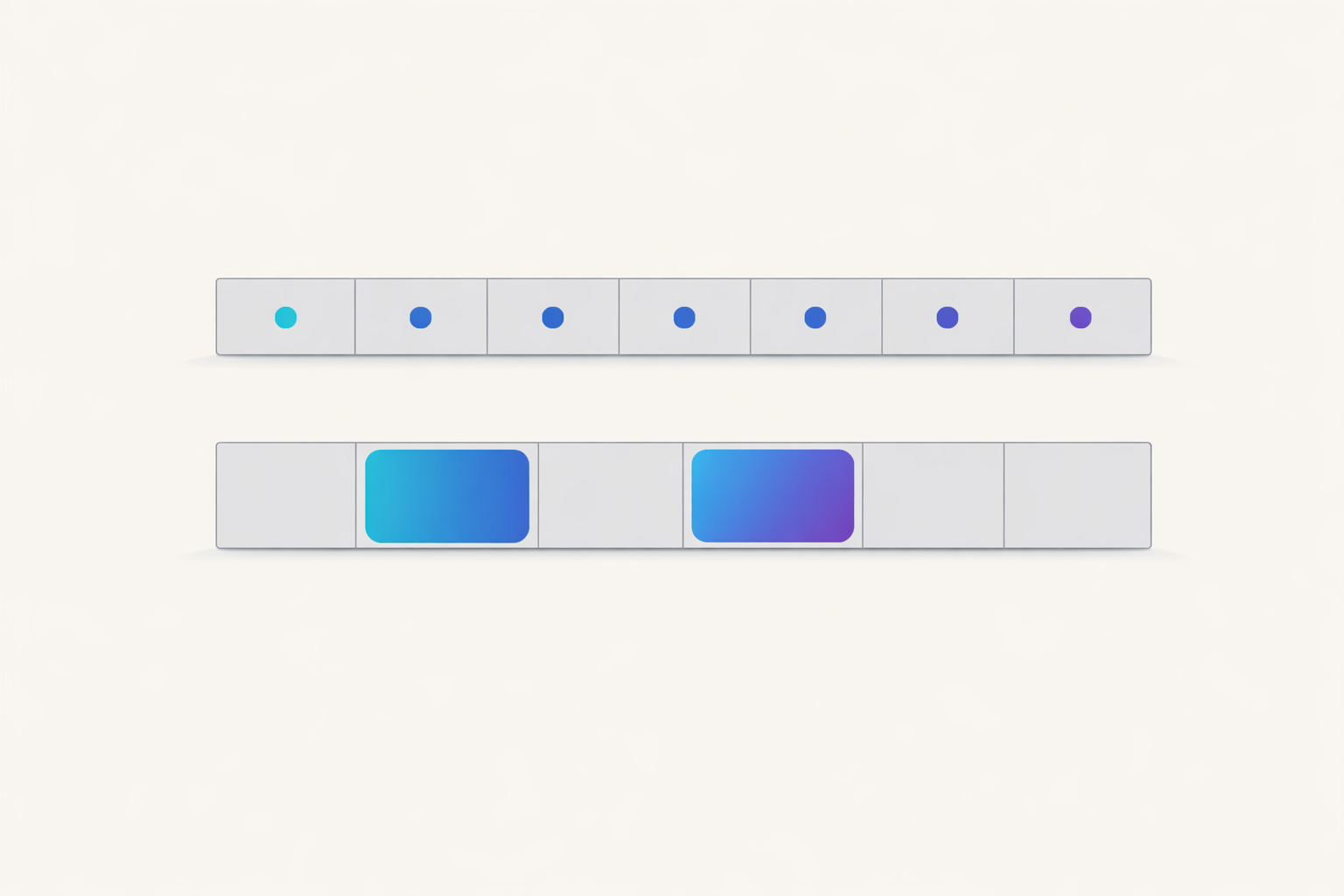
A meta-analysis of distributed-practice experiments by Cepeda, Pashler, Vul, Wixted and Rohrer in 2006 found that the gap between practice episodes and the gap before the test jointly decide what you keep. For speaking, one study of Japanese learners of English reported that short- and long-spaced practice were equally beneficial for improving L2 fluency overall. Neither compared two minutes with fifteen; the table below is our arithmetic.
| Two minutes daily | Fifteen minutes twice a week | |
|---|---|---|
| Speaking time per week | About 14 minutes | About 30 minutes |
| Separate practice events | 7 | 2 |
| Typical gap between events | 1 day | 3 to 4 days |
| How it fails | Feels too small to count | One lost evening halves the week |
The long session wins something real: fifteen minutes trains turn-taking and holding an argument across turns. Most people searching for a 15 minute daily English practice routine do not have it.
How many times do you have to repeat a correction before it sticks?
Nobody has a universal number, but you can work to a defined one. In Two-Minute Speaking the rule is documented: every mistake becomes a named item in an error ledger. An item closes after N correct uses across N separate sessions, spaced by the open-source FSRS schedule. The default N is three, adjustable from one to ten, and at most three items stay open at once.
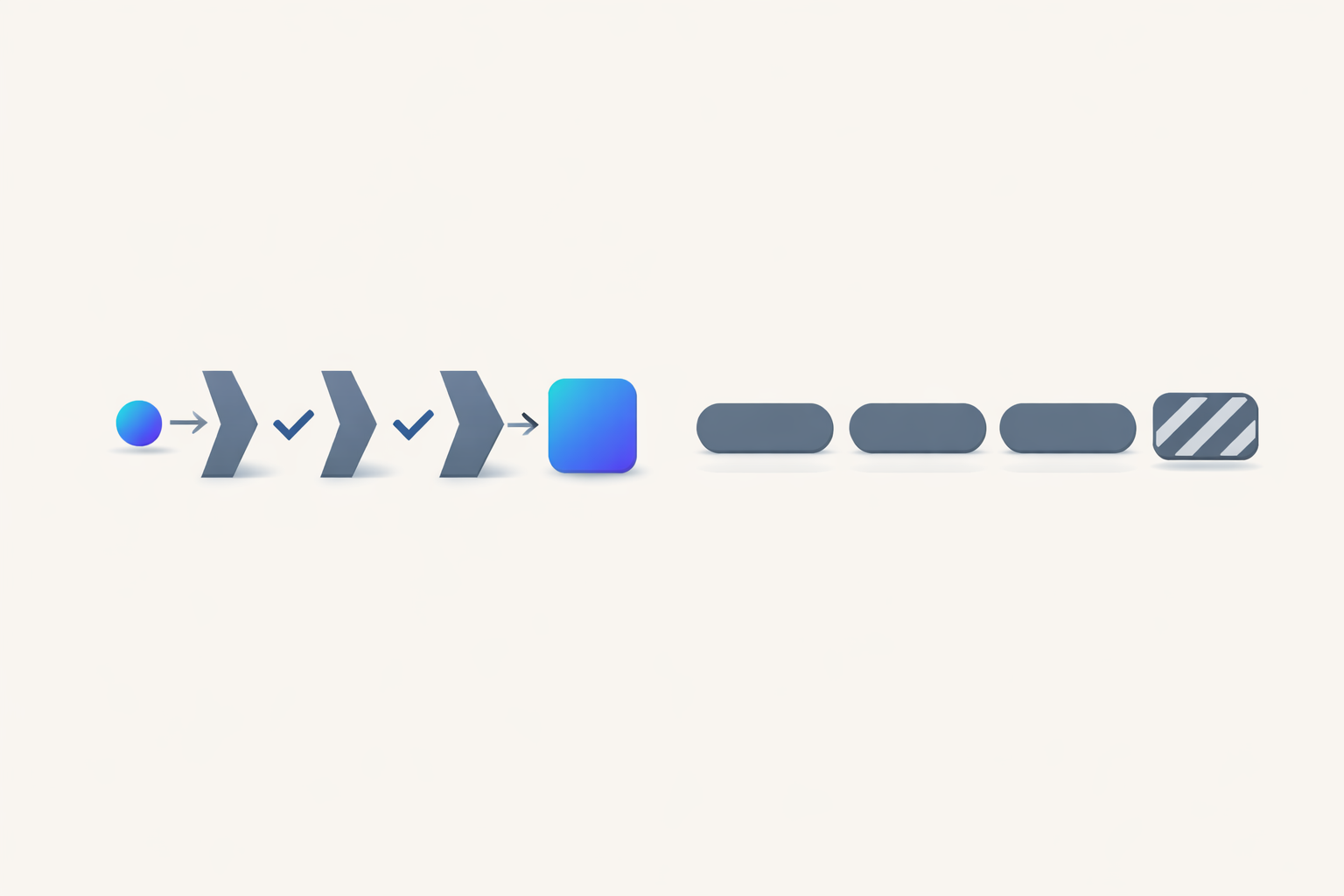
On paper, write the item down with a tally and count only uses from separate sessions. Three ticks closes it, which is how the error ledger closes an item.
Warning
The default of three is a design choice, not a measured threshold. No study here says three correct uses fix an error, and the app has no published outcome data. The research supports spacing, not the number.
How fast can your English actually improve?
Fast enough to notice one fixed item in a week, and slower than any promise you have been sold. Speaking is not one skill with one clock; automaticity builds item by item.
In a habit study of ninety-six volunteers, the average time to reach maximum automaticity was 66 days, ranging from 18 to a predicted 254. That study tracked eating, drinking and exercise, not English, so treat the spread as the lesson, not the number.
Count items closed per week instead of measuring a feeling. A closed item is a mistake you no longer make; a streak only measures attendance.
What does one week of two-minute sessions look like?
Seven sessions, one target, and a gap in the middle on purpose. All you need is a phone recorder and somewhere quiet. The point of the week is one closed item.
- Day one. Record a two-minute answer to a real question, then listen back.
- Day two. Name what you heard yourself do twice, then say five short sentences using it.
- Day three. Answer a new question with the corrected form inside it.
- Day four. Leave the item alone and answer something else.
- Day five. Come back cold and use it in one sentence.
- Day six. Use it in your hardest context, a work call.
- Day seven. Re-answer day one’s question and compare the recordings.
Make the target evidence, not a guess: the thing you heard yourself do twice on day one, or the thing the person you speak English with keeps noticing. Otherwise, name the mistake you keep making.
Day four looks wasted and is the most important one. The spacing-effect research supports a gap before recall, so returning cold is a feature here, not a lapse.
How do you keep the routine on a day that falls apart?
Shrink the session, do not skip it. The minimum is one sentence using your open item, said out loud anywhere you can speak.
Speak into your phone in a parked car, a stairwell landing, or the kitchen while the kettle runs. If speech is impossible, type the sentence, but it is the weaker version: the retrieval evidence comes from people speaking out loud.
Tip
Attach the session to something that already happens daily: closing the laptop, parking the car. A fixed trigger survives a bad week better than a fixed time.
Missing once is not a failure state. In that same habit study, a single missed day had little impact on later automaticity gains.
When two minutes a day is the wrong plan
Three kinds of readers should skip this routine: a short session trains retrieval of specific items, not stamina, turn-taking or unplanned conversation.
With an exam or interview inside a few weeks, rehearse full-length answers under a timer: the test is sustained speech under pressure. If you are moving abroad, find people and talk badly at them, because volume matters more than precision. A true beginner needs input and vocabulary first.
Check tonight’s session against these four things
Any session, in any app, passes or fails on four properties. A session failing two of the four is review, not speaking practice.
- Did you say it out loud? Thinking or reading silently does not count, so redo it where you can speak.
- Was there exactly one target, named specifically? “My grammar” is not a target; “present perfect with since” is. If you cannot name it, listen back.
- Did something tell you whether you got it right? A recording, a person or an app. If nothing corrected you, you rehearsed the mistake.
- Is the item written down with a count? Without a tally you cannot know when it closes, so add one tick per session.
Questions people ask before they start
Is two minutes a day really enough to improve spoken English? It is enough to close named items one at a time, which is how spoken accuracy changes. It is not enough to build stamina, so add longer sessions when you have them.
How many times do I need to use a correction before it stays fixed? In Two-Minute Speaking the default is three correct uses across three separate spaced sessions, adjustable from one to ten. That is a design choice, not a research finding.
What do I do if I have nobody to speak English with? Record yourself answering a real question and listen back once; your own recording is the correction source. An app that responds and names the error does it faster.
Does it matter what time of day I practise? No research cited here covers time of day for speaking practice. A fixed trigger helps more than a fixed hour, so hang the session on an event that happens every day.
What happens to the routine if I miss three days? The habit research above covers one missed day, not three, so nobody can say what three days costs. Your open item is still open, so run the one-sentence minimum on the day you come back.
Your first two minutes
Do not plan the routine, run it once. Pick one question from your own week, answer it out loud for two minutes tonight, and get one thing named. A short placement session will name your first item, so start a two-minute session.
Written by Ali Saberian, founder.
Leave a Reply