
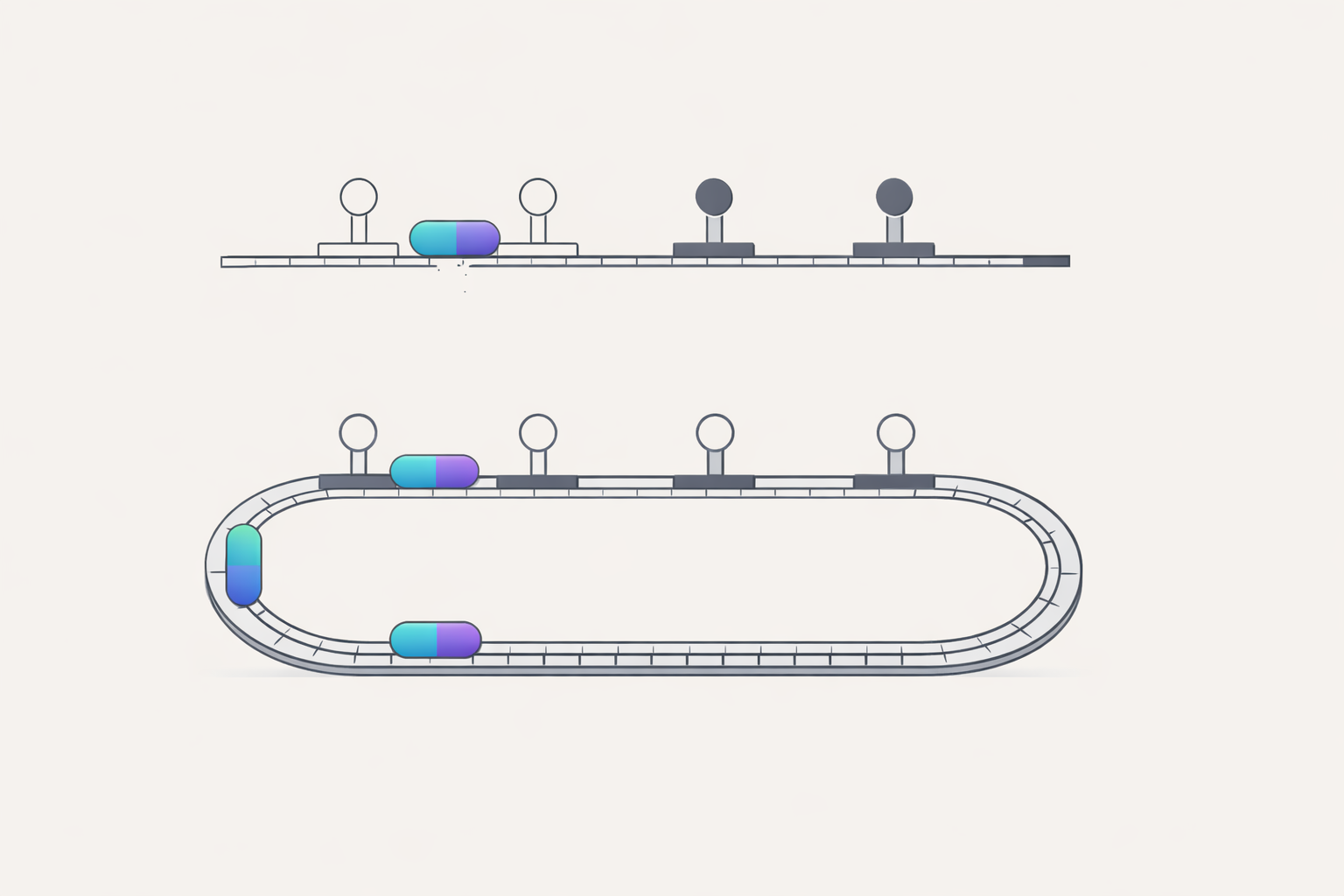
Counted against the four jobs a speaking coach has to do, ChatGPT voice mode English practice does two of them. It hears you, and it will correct you if you tell it to. What it does not do is keep a list of your own specific mistakes and bring one of them back on a day you did not choose. Those are the two layers that stop an error repeating. So it replaces a speaking app if your problem this month is not speaking enough. It does not replace one if the same mistake keeps coming back.
What ChatGPT voice mode does better than any speaking app
Start with what it wins, because the disclosure matters: this site publishes Two-Minute Speaking, an English speaking app, so we compete with general assistants for your practice time. Read the rest knowing that. A general assistant will talk about any subject on earth, including your own field, your own meeting agenda and your own documents. It moves between registers without being asked, from a salary negotiation to small talk about the weather. There is no curriculum and no order to work through, so tonight’s session is whatever you actually need tonight.
It also explains itself in whatever language you ask for, which matters when a rule will not land in English. It costs you no second subscription if you already pay for it, and there is nothing new to install or remember. OpenAI describes the feature simply: “ChatGPT Voice lets you speak with ChatGPT and hear a spoken response. Voice works within a chat, so you can listen while following the response in text” (OpenAI’s ChatGPT Voice help page, checked 27 September 2026).
On the free plan, voice is available but metered in a way OpenAI does not publish as a number. Its voice page lists free access as “Limited access to GPT-Live-1 mini” and adds that “Limits may change.” The free tier FAQ says text chat is unlimited, but adds that “File uploads, image generation, voice, data analysis, and other tools have separate usage limits.” We could find no minutes-per-day or messages-per-day figure on any OpenAI page on 27 September 2026, so we will not print one. You can also make it correct you rather than just answer you; the wording to do that is in our guide on how to set ChatGPT up to correct you.
Which of the four jobs it actually does
A speaking coach has four jobs: hear you, correct you, remember what went wrong, and bring it back later. We set that frame out in full in the four jobs an AI speaking coach does, including how to test each one. Here is where a general assistant lands on each, with a check you can run inside a single session.
| The job | ChatGPT voice mode | A dedicated coach | Check it yourself in one session |
|---|---|---|---|
| Hear you | Speaks and listens in a normal conversation, and adds a transcript to the chat afterwards | The same, and what you said stays attached to your record | Read the transcript and find one sentence it misheard |
| Correct you | Answers what you meant; names the error only if you told it to | Names one error per session by design, not on request | Say a sentence with a deliberate error and see whether it is mentioned |
| Remember it | Stores details it judges relevant and reuses them when they fit the conversation | Stores that error as one named line in an error ledger | Ask what mistake you made last week and see what comes back |
| Bring it back | Nothing is due; the next session starts with whatever you raise | Chooses which line returns today, and will not close it early | Come back tomorrow, say nothing about yesterday, and wait |
The correction row is the honest one in both directions. It will name your errors, clearly and patiently, and it will do it only when instructed, because its default job is to understand what you meant and reply. The research we summarise on the four jobs page is consistent on the point that correction helps, which is exactly why a tool that skips it by default leaves the useful part to you. The transcript is what makes that row checkable: OpenAI documents that “A transcript is added to the chat after a Voice conversation.”
The split falls where it does for an engineering reason, not a quality one. Hearing and correcting come from the model itself, off the shelf. Remembering your errors and scheduling their return need a per-learner store and a scheduler on top, which someone has to build and maintain for each learner. A general assistant is not failing at its job here. It was never built to be a record of your Tuesday mistake with a plan for Friday.
Does its memory stop you repeating the same mistake
Not in the way learners hope, and OpenAI’s own documentation is the place to settle it rather than anyone’s impression. The Memory FAQ says ChatGPT “can remember relevant preferences and details from your chats and other available sources”, listing past chats, saved memories, custom instructions, files in Library and content from connected apps. The sentence that answers our question is the next one: “Memory does not retain every detail from every conversation. ChatGPT decides which available information is relevant to a response” (checked 27 September 2026).
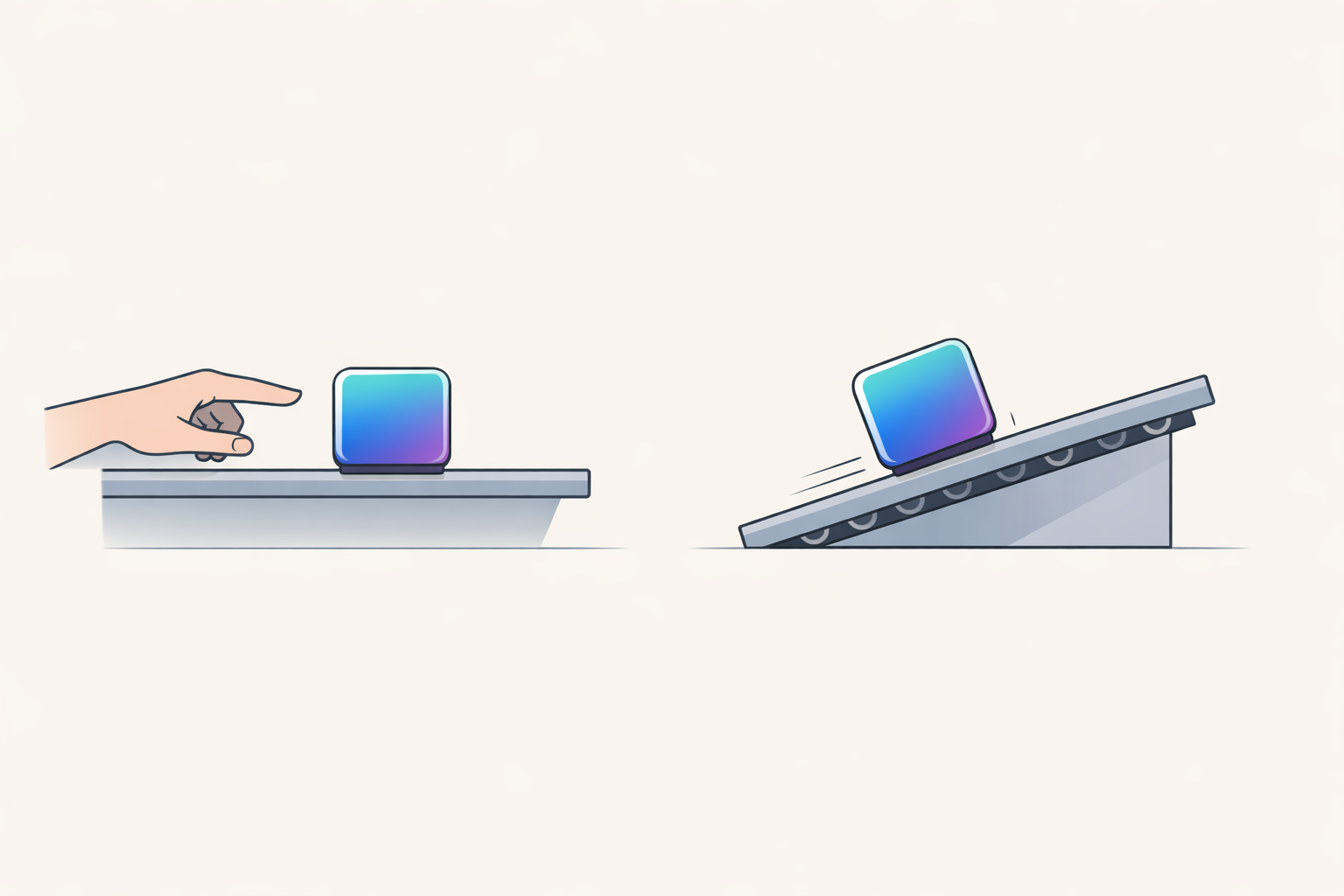
That is a store, and a store answers one question: what do I know about this person. A scheduler answers a different one: what is due for this person today. The second decides the day itself, does not wait to be asked, and will not close an item until you have used it correctly on separate occasions. Projects do not change this either; OpenAI documents that chats inside a project can reference other conversations in that project but not conversations outside it. Whether memory itself is available on the free plan is not stated on the OpenAI pages we read, so we are not going to tell you either way.
Note
A tool that stores a fact about you is not a tool that schedules its return. Those are two different pieces of engineering wearing one word.
Our own product is one example of the second kind. The threshold is a design choice we made, not a measured finding: an error closes only after three correct uses across three separate sessions, with at most three concepts open at once and one point per session. The scheduling maths behind that sort of rule is the FSRS family, which we explain on the four jobs page. None of it is cleverer than a general assistant. It is simply a different machine.
You can test the difference this week without reading another review. Tell your assistant a mistake you keep making, in one sentence. Come back tomorrow, start a session, and say nothing about it. If it arrives on its own, the scheduling layer is there; if the conversation is pleasant and the mistake never surfaces, you are the scheduler.
Can it hear your accent or score your pronunciation
Two separate questions hide in that one, and they have different answers. The first is whether it transcribes non-native speech accurately. The honest answer is mostly yes, with a known weakness around fillers, repetitions and self-corrections; this is research we summarise on the four jobs page, not a measurement of ChatGPT specifically. This matters because a correction of a misheard sentence is a correction of something you never said. Read the transcript after the session; it is the only way to catch that.
The second question is whether it can judge how you sound. OpenAI does document a pronunciation feature, and it is not the one learners assume. Its release notes record in June 2026 that “ChatGPT can now include text and audio pronunciation guidance for words in more than 60 languages.” This was improved in August 2026, so that “When you ask how to pronounce a word or phrase, you can now tap to hear it aloud and see a phonetic breakdown.” That is a dictionary you can talk to. It is guidance on how a word should sound, not a measurement of how you said it, and no OpenAI page we read describes scoring your own spoken attempt.
So when voice mode calls your pronunciation good, treat it as conversation rather than assessment. We owe you the same honesty about our side: our pronunciation scoring is documented as planned and is not in the product today. The wider research we cite on AI scoring found it generous compared with human raters. No study we could find measures learning outcomes for either route, so this whole comparison is about documented mechanism, not about measured results.
Warning
Every feature statement here carries the date we checked it, 27 September 2026, because plans, menus and voice models change often. Read OpenAI’s own page before you decide anything on the strength of a review, including this one.
What doing the missing part by hand costs you
Both missing layers can be built by hand, which means the real question is not whether ChatGPT can do this. It is what the bookkeeping costs you and whether it survives a month. Here is the whole job, with no teaching attached.
- Bring the standing instruction with you every session, because the session starts blank.
- Write the mistake down as one named line, in your own words, the moment it happens.
- Decide each day which of your open lines is due today.
- Notice when a line has been used correctly on three separate days, so you can close it.
The count has to come from you, because we have no data on how long this takes anyone and will not invent a figure. Time one session’s overhead this week with your phone, then multiply it by the number of sessions you actually intend to do. That product is the price of the missing layers, paid in your minutes instead of in currency.
One honest observation, already published on our page about what free AI practice leaves out: this route works only while the file survives, and most people stop in the second week. That is not a character flaw. It is precisely the labour that paid tools sell, which is the trade you are actually weighing. If you would rather keep the list yourself, the card method there is the version that works without any app. Note too that separate days are the point, and a list you review when you remember to is not a schedule. For the money question in currency, see what the money actually buys. If your real question is whether either tool can explain a rule in your first language, that is answered in our piece on being coached in your own language.
When ChatGPT alone is the better choice
Some readers should not buy anything this month, and saying so costs us nothing but a sale. If you have not spoken English aloud in months, your bottleneck is volume, not precision, and an endlessly available assistant that will talk about anything is the right tool. Spend six weeks there. A scheduler with nothing to schedule is just admin.
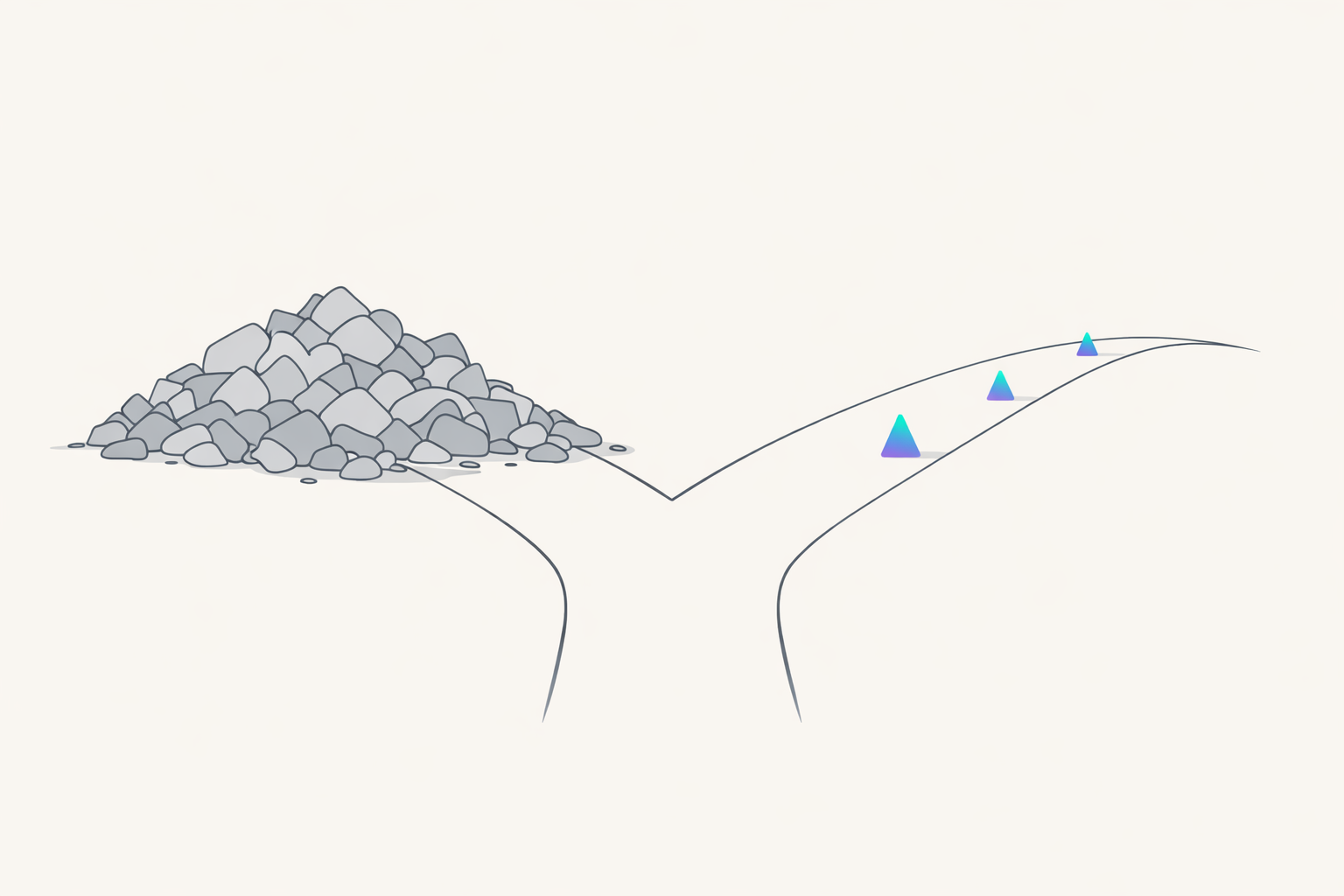
The same is true if your obstacle is nerves rather than accuracy. Unpressured talking with something that cannot judge you socially is the treatment; we cover that in why you freeze when you speak and in English speaking anxiety. It is also the better choice if your practice is bound to one narrow subject, such as your own field or your own documents, which no curriculum will cover. And if you would rather not give a second company your voice, that is a reasonable position, not an excuse.
A dedicated app is worse at several things, ours included. The range of subjects is narrower, you have to accept a shape somebody else designed, and it is one more habit to keep alive. Two-Minute Speaking has no published outcome data, its free allowance is small, its sessions are one to one only, and it lives on your home screen as a web app rather than a native one. A patient human tutor still beats both routes on reading the room, as we argue on the four jobs page.
The limit of that argument, stated as our judgement rather than a finding: volume stops being the bottleneck at some point. You will know because a mistake you can name in one sentence will still be there after weeks of comfortable conversation. That is the month the two missing layers start to cost you something.
Three questions that settle it
No score, no ranking. Answer these three tonight and the decision makes itself.
- Can you name, in one specific sentence, the mistake you want to stop making, rather than saying “my grammar”?
- When you came back the next day and said nothing about it, did anything bring it back to you?
- Are you willing to keep that list yourself, every day, for a month?
A no on the first means your problem is volume. Stay where you are and talk more. A yes on the first and a no on the second means you need the scheduling layer, from an app or from your own file. The third question decides which of those two it has to be, and a no there is information about your week rather than about your character.
This rule says nothing about how fast anyone improves, and it is not a test of whether an app is worth paying for. That test is the six-check version on the four jobs page, and the separate question of whether a free tier’s bargain holds for a month is on our free practice page.
Questions people ask about ChatGPT and speaking apps
Is ChatGPT voice mode as good as a dedicated English speaking app? For talking, yes, and for range of subjects it is better. For closing a named mistake it is not, because nothing in it keeps your errors as a list and brings one back on a day you did not choose. No study we could find compares learning results from the two routes, so judge it on mechanism and on your own last session.
Should I pay for a speaking app if I already pay for ChatGPT? Only if you can name the mistake you want closed and nothing is bringing it back to you. If you can, you are paying for the scheduling layer and the bookkeeping, not for conversation. We deliberately print no prices here; the money question is answered on our page about what the money actually buys, and the free question on our free practice page.
Does ChatGPT remember the mistakes I made last week? It can remember relevant details from your chats. But OpenAI states that memory “does not retain every detail from every conversation” and that “ChatGPT decides which available information is relevant to a response” (checked 27 September 2026). So a mistake may resurface if the conversation makes it relevant. Nothing documented brings it back on a date of its own choosing.
What does a dedicated speaking app do that ChatGPT cannot? It keeps each error as one named line rather than a score, teaches one point per session, and decides which line is due today instead of waiting for you to ask. That is the whole difference, and the longer case for the category is in our explainer on what an AI English speaking app does.
Which suits a beginner better, ChatGPT or a speaking app? Someone who cannot yet produce a full sentence needs a patient human first, which is what we say on the four jobs page and still say here. Neither tool repairs a missing foundation. Once you can hold two minutes of imperfect conversation, either route starts working.
If the mistake you can name is still there after a month of pleasant sessions, the missing part is not effort. Two-Minute Speaking, the app this site publishes, keeps each mistake as a named line and brings it back on a day it chooses, not a day you remember. Run a placement session and judge the first correction for yourself, then go back to ChatGPT for everything it does better.
Leave a Reply