Roughly $8 to $20 a month is the AI English speaking app cost you can confirm from vendors’ own pages, checked on 24 September 2026. Praktika’s homepage states about $8 a month. ELSA Speak’s App Store listing shows $19.99. Yearly plans land near $71 to $130, because a year is billed once up front. Two well-known apps publish no fixed figure at all. The spread is not branding. Apps that only generate conversation are cheap to run. Apps that keep a record of your specific mistakes and bring them back on later days cost the vendor money every day you use them.
What AI speaking apps charge right now
AI speaking apps sit in bands, not in a league table: a capped free floor, a budget subscription in single-digit dollars, a mid subscription near twenty dollars a month, and vendors who publish no number anywhere. Every figure below came from the vendor’s own page or official app-store listing on 24 September 2026. Prices here change often enough that you should open the link before you pay.
| Band | App and plan | Price when checked on 24 September 2026 |
|---|---|---|
| Capped free | TalkPal Basic | $0, with a 10-minute daily limit |
| Budget subscription | Praktika, monthly | About $8 a month, stated on its own homepage |
| Mid subscription | ELSA Speak, monthly | $19.99 a month on its App Store listing |
| Mid subscription | ELSA Speak, one year | $71.00 to $129.99 on the App Store; $79.99 on ELSA’s own landing page, marked down from $159.99 |
| Dated vendor figure | TalkPal Premium | $4.99 a month or $39.99 a year, stated by TalkPal in a 2025 press release and not confirmed as current |
| No published price | Speak, Loora | Neither vendor prints a figure; both say the price depends on region, plan or promotion |
Two of the best-known apps here will not give you a number before you sign in. Speak’s own site says pricing varies by plan, region and any current promotions. Loora’s own pricing support article is blunter: “Loora’s prices vary depending on your country and current promotions. To see the exact price available to you right now, visit loora.com/login/student.” That is a vendor statement, not a gap in our research, and it means no roundup can honestly quote one price for either app.
The same app can also show two different prices on two of its own pages. ELSA Speak’s App Store listing gives a one-year range of $71.00 to $129.99; its own landing page shows $79.99. Regional pricing, store commission and live promotions explain most of that gap. Add local tax and card conversion, and the amount leaving your account is rarely the amount on the marketing page.
The free floor is real but narrow, and it belongs to another page. Most apps cap a free tier by minutes or sessions a day, as TalkPal does at ten minutes. If you want to spend nothing, the options and their limits are set out where you can practise with an AI for free.
Why one app costs three times another
The price difference is a difference in which costs fire again every time you open the app. Three things happen on every turn of a spoken conversation: your audio becomes text, the reply becomes speech, and a model generates that reply from scratch. None of it is paid for once. It scales with minutes spoken, which is why unlimited voice is the hardest product in this category to sell cheaply.
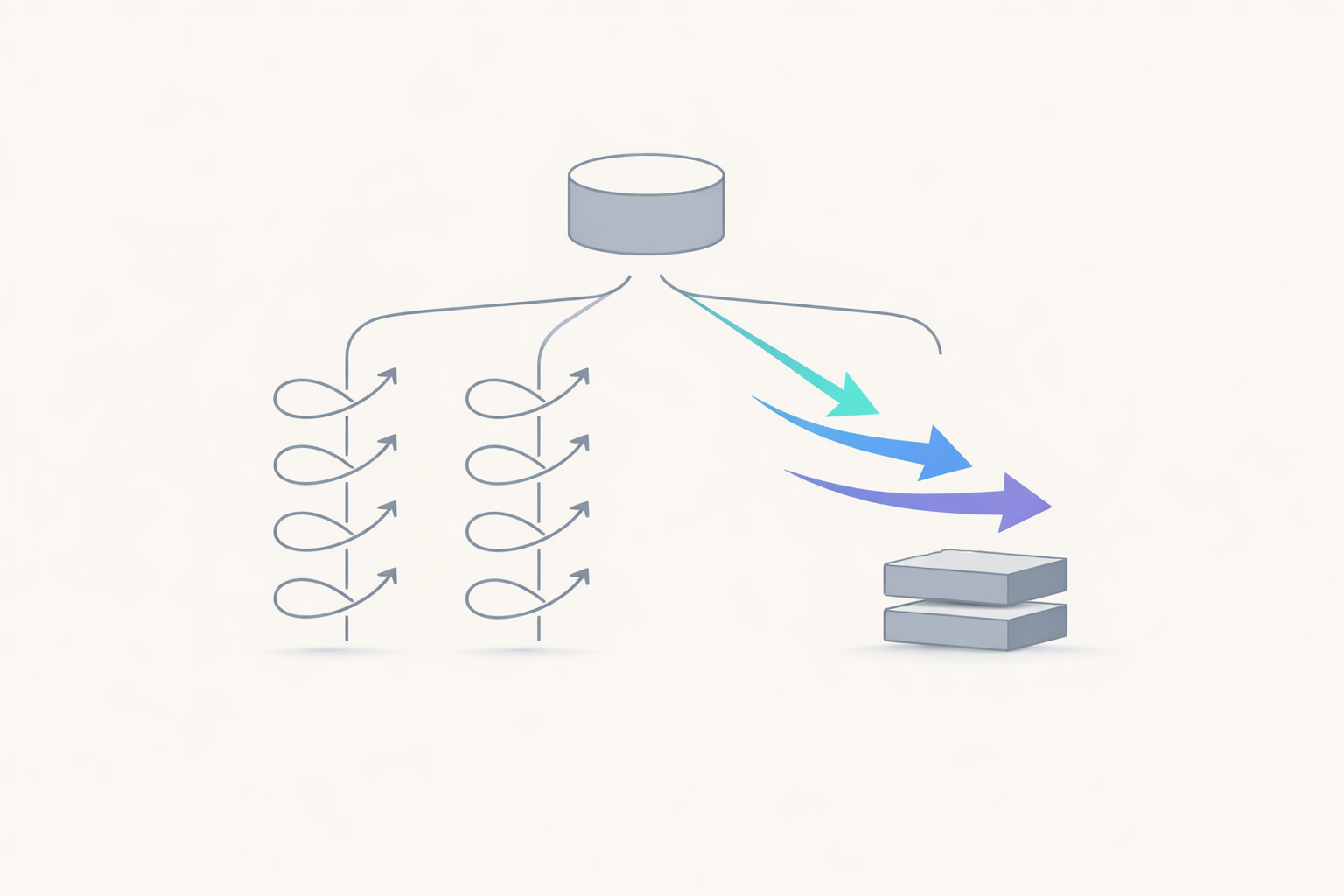
A second group of costs recurs per learner per day rather than per turn. An app that stores your individual errors and runs a scheduler deciding which come back tomorrow is working on days you never open it. That is the layer described in how AI English speaking practice works, and it is why a memory-based coach cannot be priced like a content app. Teaching one point per session means a record that grows for every learner, for as long as they stay.
Against that sits everything paid for once and reused. Fixed lesson content, a curriculum, an interface, a pronunciation-scoring model: expensive to build, close to free on the ten-thousandth learner. An app built mostly from these can charge a few dollars a month. An app whose costs arrive with every sentence you speak cannot.
Human hours are the largest cost line anywhere they appear, and they set the top of a price table. Among the apps we checked, none advertises live human tutoring inside the subscription. They are AI-only, which is why the confirmed range stops near $20 a month rather than running into the hundreds. Vendors do not publish unit costs, so this section names which activities recur, not anyone’s margin.
Paying monthly against paying for a year
A yearly plan here usually sells at roughly half the monthly rate, and vendors show that arithmetic themselves. ELSA Speak’s landing page prices one year at $79.99 against a $159.99 list. TalkPal’s press release put its annual plan at $39.99, described as the equivalent of $3.34 a month against $4.99 billed monthly. The saving is real. So is the commitment, made on day one, before you know whether the habit holds.
What vendors leave off the pricing page is year two. A discounted first year renews at the list price, so two years cost the first-year price plus the list price, not double the discount. Take Two-Minute Speaking, this site’s own app, as the example, since it is fair to do the sums on ourselves first. Our welcome offer is £59.99 for the first year and renews at £99.99, so two years cost £159.98, not £119.98. Still less than two years of monthly billing, but not the number the offer implies.
Countdown offers are a pricing tactic, not a deadline in nature, and ours is no exception. The Two-Minute Speaking welcome window is three days, it opens once, and it does not restart. We print that because this page asks you to check the same thing everywhere else.
Warning
Write the renewal date in your calendar on the day you pay. Where a reminder email exists at all, it usually arrives a few days before the charge, not a few weeks.
Lifetime deals deserve a colder look. ELSA Speak markets a lifetime plan, though we could not confirm its current price from a vendor page, so we will not print one. With any one-off fee you are betting that the company still exists in three years, still runs the servers. It is also betting the company can keep covering the speech and inference cost of every future conversation from a payment made once. That bet is sometimes fine. It is never risk-free.
The only price calculation that matters
Take the yearly price, divide it by the number of sessions you will honestly finish in a year, and ask whether you would hand that amount over in cash each time you opened the app. That is the whole test. The sticker price tells you what the vendor charges; this division tells you what you actually pay per useful minute. On the same plan, the two can be a factor of six apart.
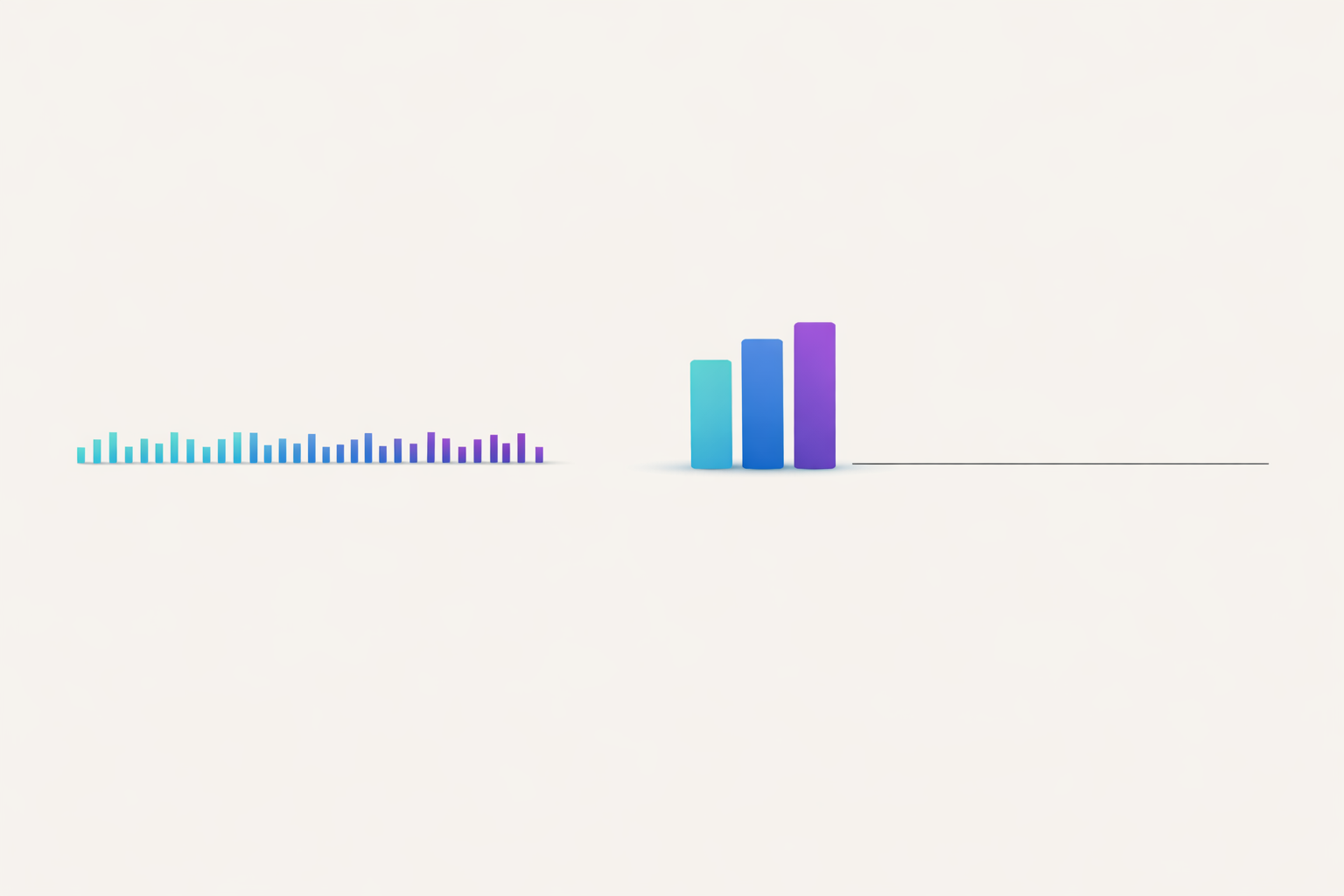
Here is the worked example, with illustrative usage rather than measured data. Two learners each pay £99.99 for a year. The first does five short sessions a week and finishes about 260, so each costs roughly 38 pence. The second practises in bursts, three good weeks then nothing, and finishes about 40, so each costs £2.50. Same plan, same price, one paying more than six times as much per session.
Tip
Do the division with the sessions you finished last month, not the ones you intend to finish next month. Four honest weeks are the only forecast you have.
The variable you control is the size of the daily ask, not the price. A plan demanding thirty minutes loses to one demanding two, at any price, if only one survives a bad Tuesday. That is the argument behind a two-minute daily routine, and it is why cost per used session moves more with your calendar than with the vendor’s discount.
Run these four questions on any pricing page.
- What is the yearly price, in the currency that will actually leave my account?
- How many sessions a week do I complete now, not in my plans?
- What does that make each session cost?
- Would I pay that in cash, at the door, every time I opened the app?
One honesty marker. This is arithmetic about money, not evidence about learning. No study here says how much practice produces how much improvement, and anyone who hands you that number is selling something.
Four things to read before you pay
Every item below is about the contract, not the product. They take four minutes to check, and they are where subscription regret starts.
- The renewal line. What price does it renew at, on what date, and does the discount apply to the first period only? A first-year offer that renews at list is normal; one that hides the list price is not.
- The cancel path. Can you cancel from inside the app or the store account, and does access run to the end of the period you paid for? If you bought through an app store, the cancel button is in the store.
- The refund line. Is there a money-back window, how long, and does it cover only a first payment? None of the vendor pages we read published a refund window; ours is a 14-day money-back guarantee on a first payment.
- The billing entity. Who takes the money and what appears on your statement? Ours is Paddle, acting as merchant of record, which is what your bank will show. That matters when a card blocks foreign merchants.
When a card is refused, the usual causes are a foreign-merchant block, a currency your bank does not process, or a store account registered in another country. Asking your bank first beats switching cards at random. We cannot promise any workaround works where you live, and neither can a vendor who says otherwise.
When a human teacher is the cheaper choice
For some readers the app is the expensive option, and a paid app should say so. Preply’s own guide to English tutoring rates says lessons usually run $15 to $50 an hour, with speaking practice averaging $16 and IELTS preparation $18. A year of a mid-priced app, roughly $80 to $130, buys five to eight hours with a person.
Spend the money on a human if you need judgement rather than repetition. A tutor can tell you an answer was technically correct and socially wrong, rewrite it with you, and hold you to a date. That beats a year of turns when one high-stakes event is coming, such as practising for a job interview in three weeks.
Spend it on a subscription if what you lack is frequency. Nobody books a tutor for six minutes on a Wednesday morning, and an hourly rate makes daily repetition uneconomic. Praktika runs this comparison on its own homepage, putting a private human tutor at around $400 a month against its own $8, which is a vendor’s framing rather than a neutral one. Many learners use both: a person for the hard conversations, an app for the days between.
What Two-Minute Speaking costs
Two-Minute Speaking is this site’s own app, so here are our numbers in the same format we used for everyone else. You start free with three full sessions and then one session a week. Full access is £19.99 a month or £99.99 a year. The welcome offer is £59.99 for the first year, inside a three-day window that opens once, and it renews at £99.99. The yearly plan carries a 7-day free trial, a first payment carries the 14-day money-back guarantee, and full access allows up to 15 two-minute sessions a day. Checkout shows the price in your own currency, with tax where it applies.
Check it rather than trusting this paragraph: the figures sit on our pricing page, and the renewal and cancellation terms say what happens at the end of a period. We are not going to call this good value. Apply the division above to our price as you would to anyone else’s.
Note
The plain limits: Two-Minute Speaking publishes no outcome data, pronunciation scoring is planned rather than shipped, and the app currently runs in the browser at app.aienglishspeaking.app with native apps planned.
Questions people ask about app pricing
How much does an AI English speaking app cost per month? Among apps whose own pages we could read on 24 September 2026, about $8 at the budget end and $19.99 at the mid end. TalkPal stated $4.99 a month in a 2025 press release, but that figure is over a year old and unconfirmed against any current page. Speak and Loora publish no fixed monthly price at all.
Why are some AI English apps several times more expensive than others? Because their costs behave differently. Speech recognition, speech synthesis and a fresh model reply happen on every turn, so they recur for ever, while lesson content and an interface are built once and reused. An app that also stores your errors and schedules their return carries a cost per learner per day that a fixed-content app does not.
Is a yearly plan worth it, or should I pay monthly? A year usually costs around half the monthly rate, as ELSA Speak’s $79.99 against a $159.99 list shows. The risk is committing before you know whether the habit holds. If you have never kept a daily practice going for a month, pay monthly once, count the sessions you finish, then decide with a real number.
Do these apps let me try before paying? Usually yes, and the length varies. TalkPal offers a 14-day free trial with no payment until it ends, Speak offers 7 days, Talkio AI’s pricing page stated a 7-day trial at last check, though the page could not be reconfirmed at the time of writing, and Loora offers a trial without stating its length. Our yearly plan has a 7-day trial, and the free start needs no card.
Why do two pages from the same app show different prices? Regional pricing, app-store commission and live promotions. ELSA Speak’s App Store listing shows a one-year range of $71.00 to $129.99 while its own landing page shows $79.99, and both are the vendor’s pages. Check the price on the surface where you will actually pay, after tax and conversion.
Before you pay anyone, including us, run the arithmetic on your own week. Three full sessions with Two-Minute Speaking cost nothing and need no card, which is enough to see whether a two-minute habit survives your Tuesday. Try three free sessions first.
Leave a Reply