
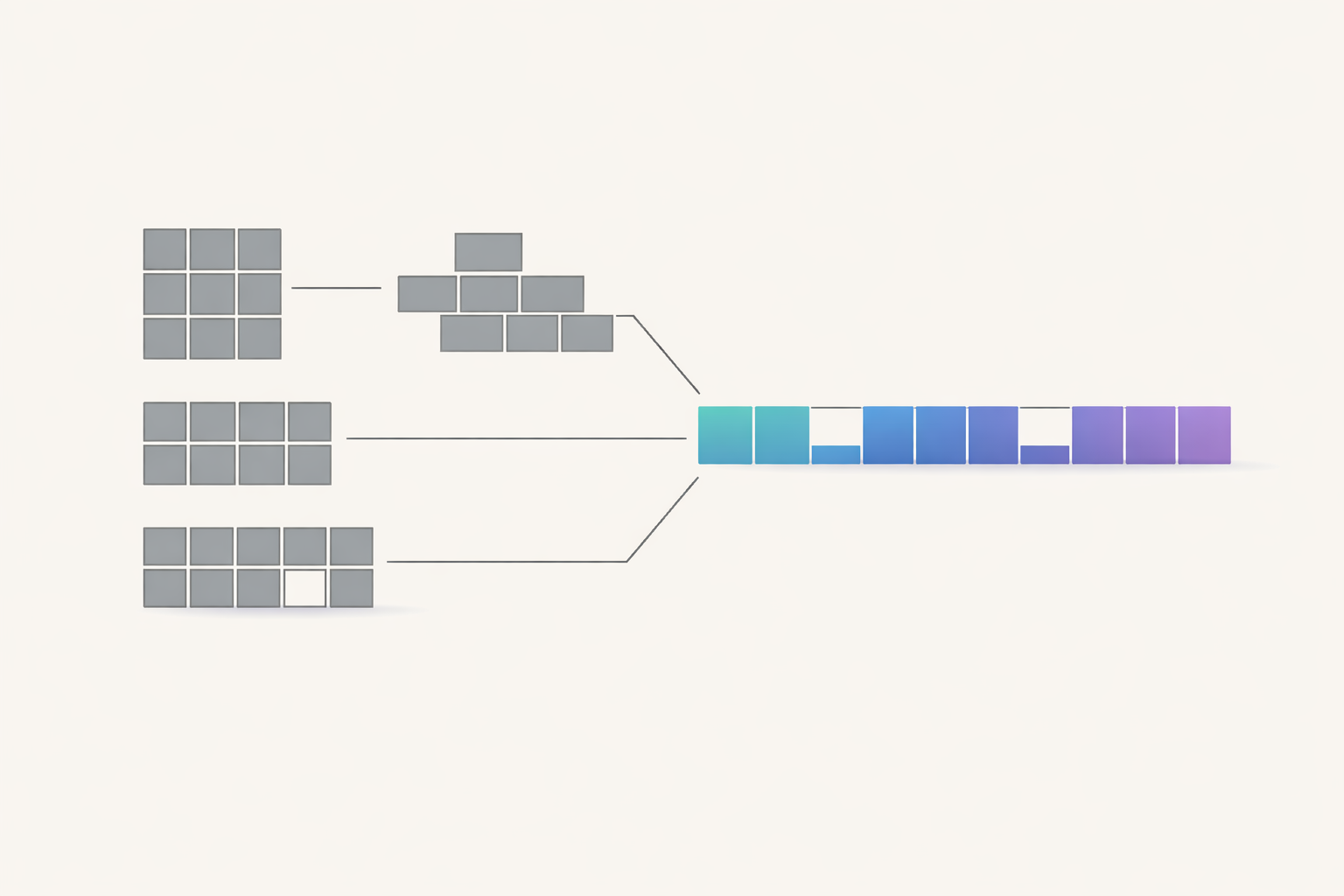
First language English mistakes are not random, and they are not a sign of a weak memory. Your first language and English mark different things, and under the pressure of speaking your mouth falls back on the habits it has had longest. Where English forces a choice your language never asks for, an article, a gendered pronoun, a cluster of consonants, a fixed phrase, the old habit fills the gap and the same error returns. Not every mistake works this way, and that is the useful part. Once you can separate your language’s mistakes from the ones every learner makes, you have two or three named patterns to practise instead of a list of twenty.
Why the same mistake comes back after you learned the rule
You learned the rule. You can explain it to a colleague. Then you open your mouth and it breaks again. That is not forgetting. Your first language is the system you have used longest, and it runs without asking permission.
The published name for this is language transfer. It is defined as “the influence resulting from similarities and differences between the target language and any other language that has been previously acquired” (Odlin, quoted in Willy’s ELT Corner). The same summary insists it runs both ways: matching structures “can result in correct language production (positive transfer),” and differing ones produce the errors. That is the whole mechanism. You can forget the term now.
Time pressure decides which system wins. While you speak, your attention is on what comes next, not on a rule you revised two years ago. Slow knowledge loses to a fast habit, which is why people who understand English but cannot speak it hear their own mistake one second too late.
Which mistakes are your language’s and which are everyone’s
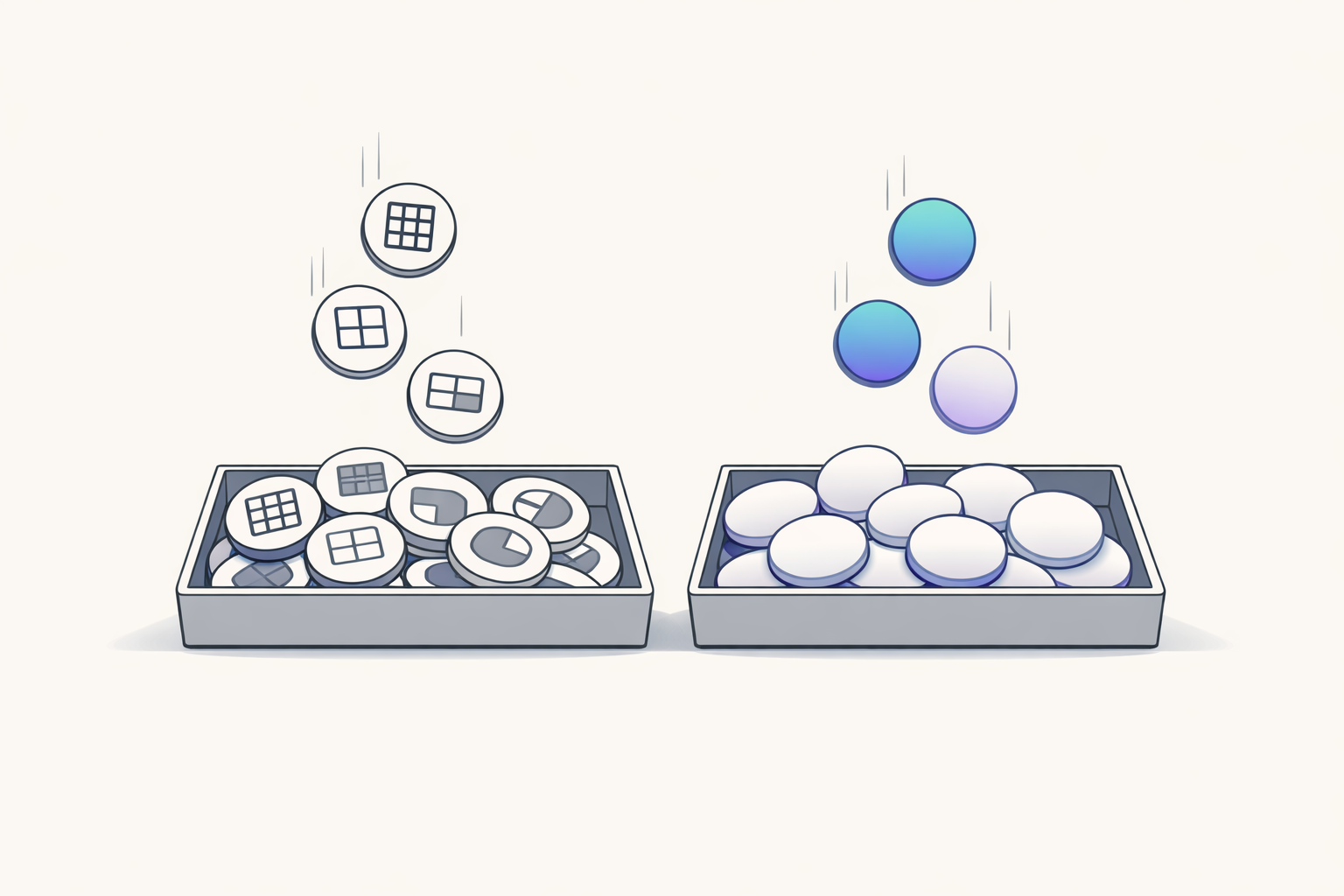
Not every repeated mistake belongs to your language. Some belong to the stage you are at, and those settle as your level rises. Read the table as a way of sorting your own errors, not as a test with a score.
| What you notice yourself doing | Sign it comes from your first language | Sign every learner does it |
|---|---|---|
| Dropping or adding the and a | Your language has no article system | Learners whose language has articles still misuse English ones |
| Saying he when you mean she | Your language uses one pronoun for every third person | A rare slip, corrected instantly by the speaker |
| Adding a small vowel inside a consonant cluster | Your language never builds that cluster there | Almost absent when the language allows the cluster |
| Leaving the -s off he, she and it verbs | Your language marks the person somewhere else | Common across unrelated languages, fades with level |
| Translating a whole phrase word by word | Your version of that formula is fixed and different | Everyone does it before the English phrase is stored |
The left-hand signs are the ones worth acting on. A feature your language handles differently, plus an error that survives after you can recite the rule, is as close to a transfer pattern as you get without a researcher. The article row has measured backing. A corpus analysis of 660 written scripts “confirms the lower overall accuracy of learners with no-article L1s” such as Chinese and Russian, against learners whose language has articles, like German and Brazilian Portuguese (Studies in Second Language Acquisition).
The right-hand column is contested, and you should know that before trusting it. Early research “claimed there exists an acquisition order of English morphemes to which ESL learners, despite their different ages and language backgrounds, adhere” (Order of acquisition). Later studies covering more first languages found “clear L1 influence on the absolute accuracy of morphemes and their acquisition order.” So treat a shared error as probably developmental, not certainly.
The six places your first language leaves a mark
Two-Minute Speaking, the app this site publishes, files every correction into six areas by design: grammar, vocabulary, nativeness, pronunciation, writing and discourse. The same six work as a map. Most learners have spent years inside the first one and have never been told that the thing making them sound foreign usually lives in the third or the sixth.
Grammar is where English forces a choice. Articles are the clearest case, because plenty of languages code definiteness elsewhere or not at all. The World Atlas of Language Structures defines a definite article as “a morpheme which accompanies nouns and which codes definiteness or specificity, like ‘the’ in English.” The database lists languages such as Cherokee with neither a definite nor an indefinite one (WALS chapter 37). If yours is one of them, English is asking for a word your head never needed.
Vocabulary breaks two ways: one of your words splitting into several English ones, and words that look borrowed but are not. Spanish supplies the famous case. “Estoy embarazada” looks and sounds like I’m embarrassed and means I’m pregnant (The Spanish Experiment). The dangerous words are never the ones you looked up.
Nativeness is the area with no rule to break. You translate a whole formula instead of a word, and the result is grammatical English no fluent speaker would build. Nothing in the sentence is wrong, so nothing flags it. See the ten patterns one first language produces for the worked example, I am agree, taken apart in full.
Pronunciation is where your language decides what your mouth can build at speed. Korean has “no consonant clusters at the start or end of syllables,” so Korean speakers often insert a vowel and strike arrives closer to sitilaiki (Banter Speech & Language). For the drills that change this, see how sound work is actually done; our own pronunciation scoring is documented as planned and is not live yet.
Writing is where you have time, which makes it your best mirror. Pronoun gender is a clean case. Turkish uses one third-person pronoun, “o,” for he, she and it (StoryLearning), while English asks you to pick a gender every time you mention a person. That source does not claim this causes English slips; the connection is our reading. It is not a niche situation either: WALS finds gender in independent personal pronouns in only about 30 percent of sampled languages (feature 44A).
Discourse is where your answer sits. Languages and the writing traditions built on them differ in how early the main point arrives. A fluent reply that saves the point for last can read as evasive to a listener expecting it first. We found no study we could verify here, so treat this as our editorial observation, and as a habit of style rather than a fact about any nationality.
Why correct English can still sound translated
Fluent speech runs on stored phrases, not on rules alone. A peer-reviewed study of formulaic language puts it plainly. Native speakers “have a repertory of various routines of word blocks, or ‘chunks.’ They must be mastered and utilized as fixed terms in suitable settings to develop a conversation that sounds natural and native-like” (PMC9379275).
That is why a grammatically clean sentence can still sound translated. You assembled it from parts; a fluent speaker reached for one block. In the same study, intermediate learners taught chunks explicitly moved from a speaking-fluency mean of 9.98 before to 12.02 after, p = 0.000. One small study, one measure, but the phrases are clearly learnable.
Note
This area is missing from most textbooks for a structural reason. There is no rule to test, only a phrase to replace, and an exam cannot mark that cleanly.
The practical move is narrow. Take the three or four formulas you actually say each week, in introductions, in meetings, in disagreement. Find the version a fluent speaker uses and drill those instead of chasing general fluency. If nobody is there to give you that version, the correction sources in practise speaking alone cover how to find one.
Why blaming your first language will stall you
The first-language explanation was once over-claimed, and the correction matters. The strong version of the Contrastive Analysis Hypothesis held that “all the errors made in learning the L2 could be attributed to ‘interference’ by the L1” (Contrastive analysis). The evidence did not cooperate. Researchers found “many errors predicted by Contrastive Analysis were inexplicably not observed in learners’ language,” and “some uniform errors were made by learners irrespective of their L1.” Comparing two grammars turned out to be a weak way to predict what a learner would say.
So some of your errors are not your language’s work at all. Some come from your stage, some from how you practised, some from a habit you copied years ago. No source we could verify puts a percentage on the transfer share, and you should distrust any page that gives you one.
Your first language also hands you things for free, which almost nobody writes about. Shared word forms are measurable help: a study of bilingual word recognition found “both identical and non-identical cognates exhibited a significantly larger cross-linguistic performance transfer than translation equivalents” (Frontiers in Language Sciences). A structure English happens to share with yours, a sound you already own, thousands of words you can half-guess: the same mechanism, working for you.
Our position, which is not a research finding: “it is my language” becomes an excuse the moment you cannot act on it. Transfer explains a mistake, it does not sentence you to it. Keep accent separate from error too. An accent is a difference a listener hears and still understands, and it does not belong on your list.
Warning
Any page promising you will lose an accent or close an error in a fixed number of weeks is selling a schedule nobody can source. That includes us.
Find your own two patterns in one week
You do not need a teacher for this, and day one takes about ten minutes. The goal is not a full inventory of your mistakes. It is exactly two you will carry through the week.
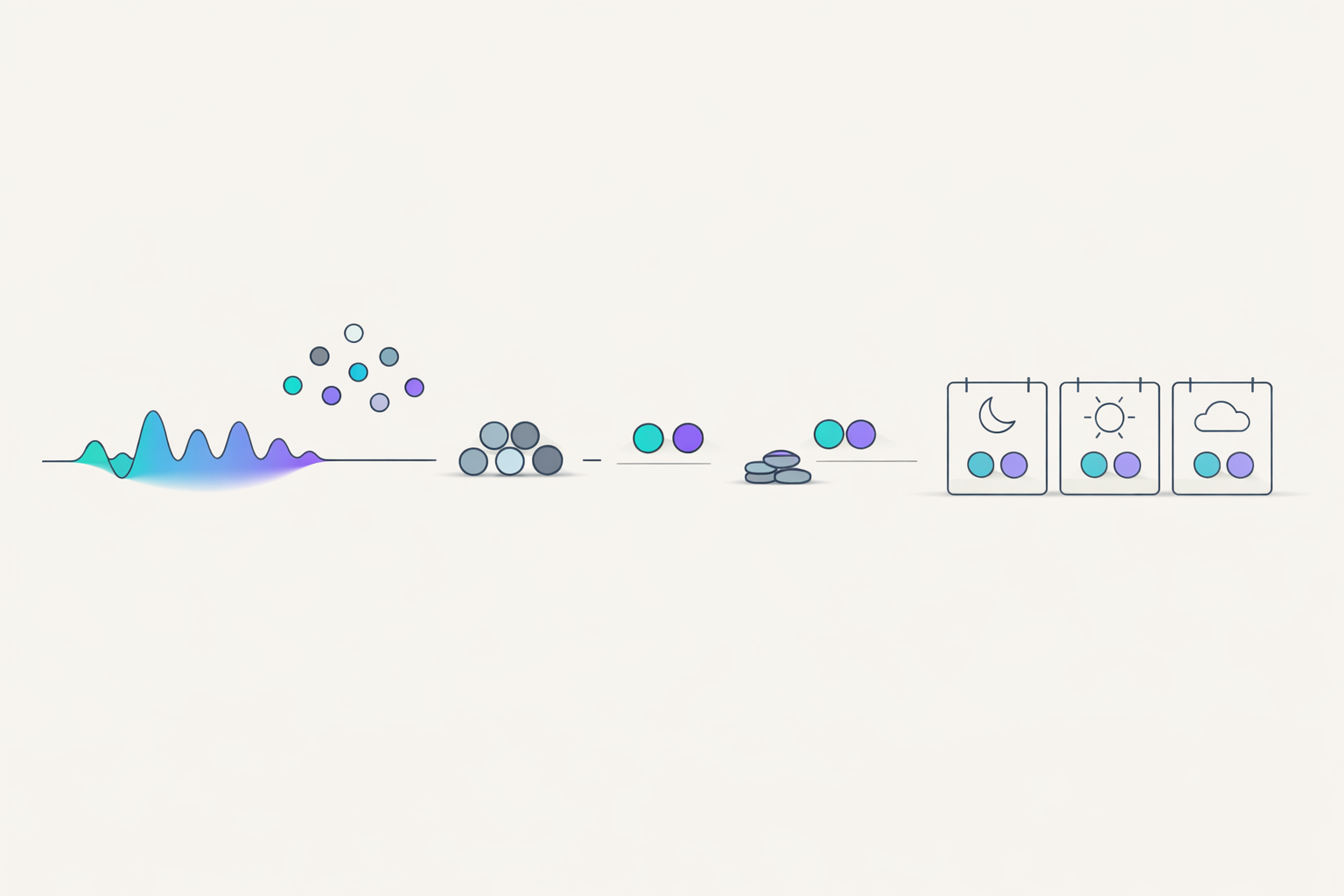
- Speak for sixty to ninety seconds about your own week, out loud, recorded. Use the method in practise speaking alone rather than inventing one.
- Listen once, without stopping. Write what you hear as named things: no article before job titles, not bad grammar.
- Sort each item with the table above, marking the ones where your language handles that feature differently.
- Keep the two that cost a listener most, meaning the ones that could cause a misunderstanding rather than merely sound foreign. Our pronunciation guide makes that ranking argument in full.
- Park the rest in writing. You will come back to the list; you are not practising it this week.
Then bring those two back on separate days instead of grinding them once. That is how Two-Minute Speaking is built, as a design choice and not a finding. Every mistake is stored as a named, specific thing in an error ledger. You work one point per session, and a concept closes only after several correct uses across separate sessions, three by default. At most three concepts stay open at once, and a coverage map shows each as not started, introduced, practising or mastered. That map is the honest answer to whether a pattern ever goes away: you watch its status change. For the routine that carries it, see two minutes a day.
A named error beats a bad feeling. My English is weak cannot be practised; I say he when I mean she about half the time can be practised tomorrow. That is the case for what an AI English speaking app does at all. Whether the correction can be explained in the language you think in is a separate question, answered where we look at being coached in your own language.
Four questions that name your pattern
Run these against one mistake at a time. No score, no bands; this only decides what goes into practice this week.
- Can I name this mistake in one specific sentence, rather than calling it my grammar?
- Does my first language handle this feature differently from English?
- Do I still make it when I am speaking slowly and calmly?
- Would a listener misunderstand me, or only notice me?
Two yes answers among the first three make it one of your first-language patterns, and it belongs in this week’s practice. A no on the last question sends it to the back of the queue, however foreign it sounds to you. The errors that embarrass you are often not the errors that cost you.
Questions learners ask about first-language mistakes
Why do I keep making the same English mistake when I know the rule? Knowing a rule and running it in real time are two different skills. Under speaking pressure, the system you have used longest fills the gap before the rule arrives. The rule is not wasted: it is what lets you recognise the error afterwards and turn it into a target.
How do I tell whether a mistake comes from my first language? Check two things. Does your language handle that feature differently from English, and does the error survive even though you know the rule? If learners from unrelated languages make it too, as the article accuracy study shows for people whose languages do have articles, it is partly developmental and softens as your level rises.
Is my first language a disadvantage for learning English? We found no source that ranks first languages by difficulty for English in any way worth acting on. Languages differ in which choices they force on a speaker, and that changes which errors you get rather than how many. Your language decides the shape of the work, not your ceiling.
Why does my English sound translated even when the grammar is right? Because fluent speech is assembled from stored chunks, and you translated a formula instead of using the stored one. Nothing breaks a rule, so no grammar exercise catches it. The fix is replacing the handful of phrases you use most, not studying more grammar.
Can these patterns still be fixed as an adult? They can be named, practised and tracked, and we will not promise a timeline, because no source we could verify supports one. What changes with method is this: an unnamed feeling about your English cannot be practised, while one specific pattern can be brought back on separate days until it stops appearing.
Pick the one pattern your recording made obvious and say it out loud today inside a sentence you actually use. Two-Minute Speaking, the app this site publishes, stores each mistake under a name you can find again and brings it back on separate days until it stops appearing. Start a placement session and let the first correction tell you which pattern is really costing you.
Leave a Reply