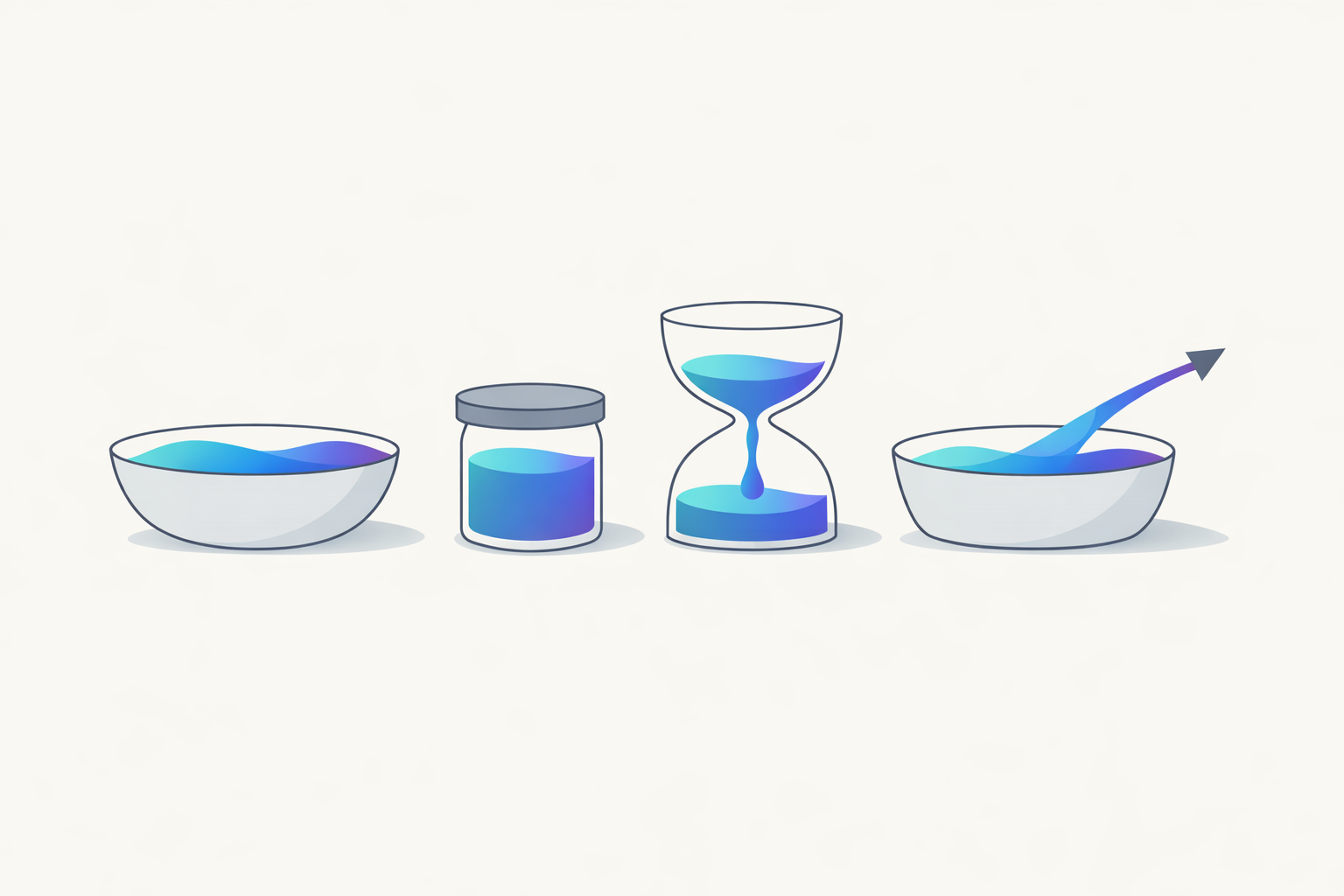
Yes, you can talk to AI to practise English free tonight, out loud, without a card. Some mainstream assistants let you hold a spoken conversation on a free account, and most dedicated speaking apps hand you a small free allowance to start. What free almost never includes is the part that changes your English: a record of the specific mistakes you make and a schedule that brings them back days later. Free buys you the talking. Paying, or keeping the list yourself, is what buys you the fixing.
Four different things people mean by free
The first bargain is a general assistant with a spoken mode. Google’s own help page says that with Gemini Live “you can have a natural, free-flowing conversation with Gemini”, and names no plan on that page (Gemini Apps Help). Google’s blog does gate two named add-ons: “Spark is available with a Google AI Pro subscription or higher” (Google blog). Other assistants including ChatGPT offer spoken modes too. We could not confirm free-plan limits from OpenAI’s own pages when we checked, so read the vendor’s page before you trust any number quoted elsewhere.
The second bargain is a capped free tier inside a real coaching app. TalkPal’s own pricing page gives its free Basic plan a “10 minute daily limit”, with the cap lifted on paid plans (TalkPal pricing). ELSA Speak’s own FAQ says “The first 2 lessons of every module are always free” (ELSA FAQ). These are narrow but permanent. You get the app’s actual correction mechanic, just not much of it, which makes this the honest way to test whether a tool’s feedback style suits you.
The third bargain is a trial, which is a countdown wearing the word free. ELSA gives new users “unlimited access to ELSA’s curriculum completely free for 7 days”. Speak’s own site states it offers a 7-day trial, after which a paid subscription is required to continue (Speak). Some tools keep AI conversation out of the free product entirely: Duolingo describes Video Call and Roleplay as features Duolingo Max “gives learners access to” (Duolingo blog). Cambly is blunter still, offering a trial lesson it describes as: “Trial lessons are just $1. That’s 30 minutes with a native-speaking tutor, any time you want.” (Cambly).
The fourth bargain is the one people fear: a free tool whose real price is your speech. Here is the honest finding. We read the published privacy and pricing pages of the tools named above and found none that states plainly that its free tier is funded by training models on learner voices. Vague wording about improving services is common; an explicit statement is not. Treat this as an open question to check for each tool, not as a fact about anyone.
Every figure above was read on the vendor’s own page on 24 September 2026. Free tiers here change monthly, so check the numbers yourself rather than trusting any roundup, including this one.
Why free tiers drop the part that fixes your English
An AI coach does four things: it hears you, corrects you, remembers the specific error, and schedules its return on a later day. The mechanism is explained in full in how AI English speaking practice works. What matters for the money question is that those four layers do not cost the same.
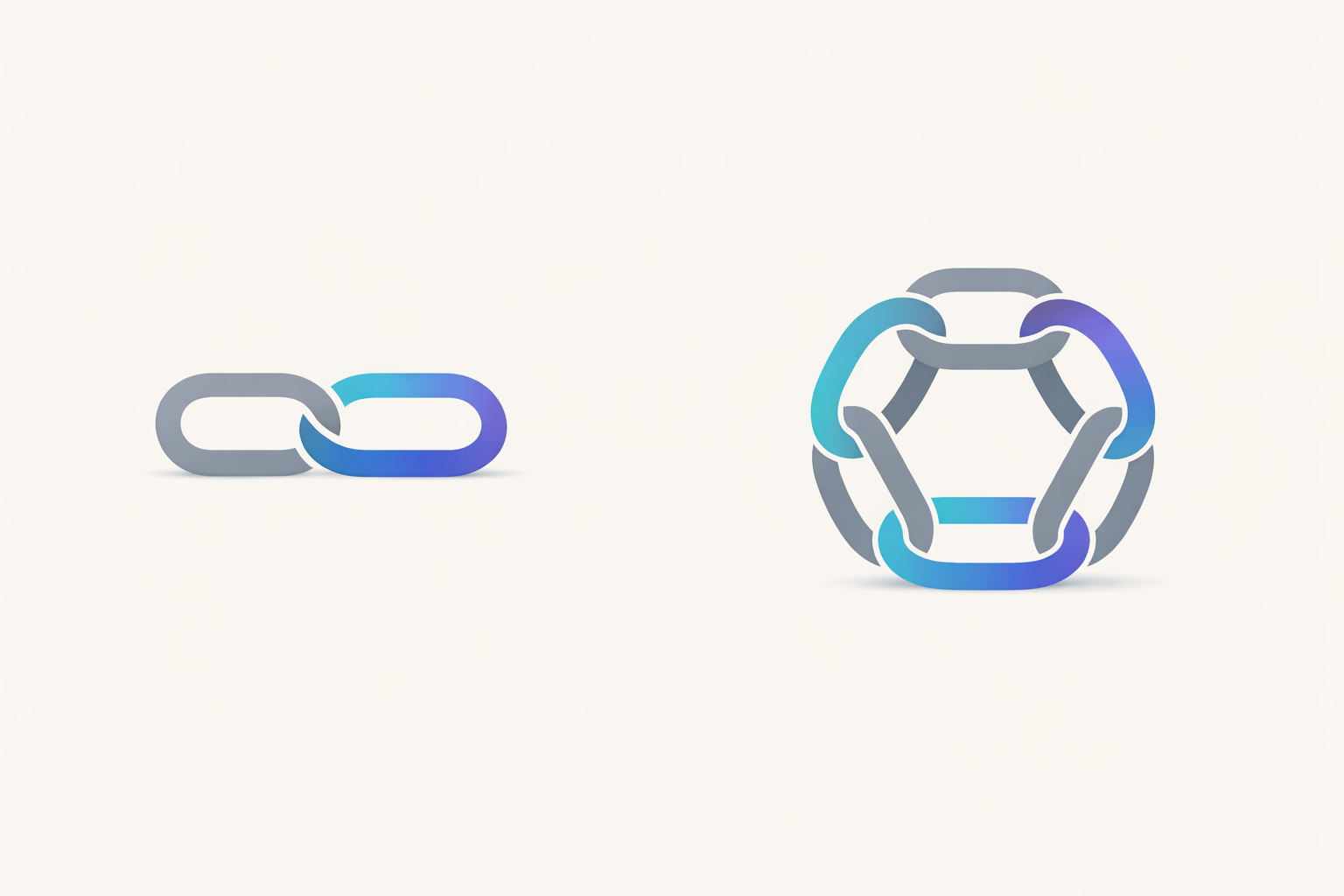
Hearing and correcting are cheap and repeatable. They happen once, inside the session you are already having. Remembering and scheduling are not: they need a store of named errors for each individual learner, kept forever, plus fresh work on every later day that learner returns. That per-learner cost is why layers three and four sit behind almost every paywall here, and why a month of free chat can feel busy and change nothing. Correction is the part that does the work: a systematic review in Frontiers in Psychology reports that “there has been a consensus that CF is beneficial to L2 learning” (Frontiers in Psychology). Correction you never meet again is correction you did not keep.
One honest limit. No study we found measures free-tier learners against paid-tier learners. The argument above is about mechanism and cost, not a measured outcome.
Free, capped and paid side by side
| Route | What it costs you | What you get | What is missing | Who it suits |
|---|---|---|---|---|
| General assistant voice mode | Nothing, no card | Conversation on demand | It will not stop you to name an error, or raise it later unless you ask | Someone who needs talking volume tonight |
| Capped free tier | Nothing, no card | The app’s real correction mechanic inside a limit, such as TalkPal’s 10 minutes a day | Volume, once the cap is hit | Someone testing whether a feedback style suits them |
| Free trial | Nothing for a fixed window, card status varies | The complete paid product, 7 days at ELSA and Speak | Everything, the moment it closes | Someone ready to evaluate on a deadline |
| Paid full access | Money, monthly or yearly | Correction plus memory and scheduling, uncapped | Nothing structural | Someone watching the same mistake return |
No ranking is implied and no row is “best”. The right row depends on whether your problem today is talking enough or fixing something specific.
How to practise with a free AI and still improve
If the free tool has no memory layer, be the memory layer yourself. That is the whole trick, and it costs a notes file.
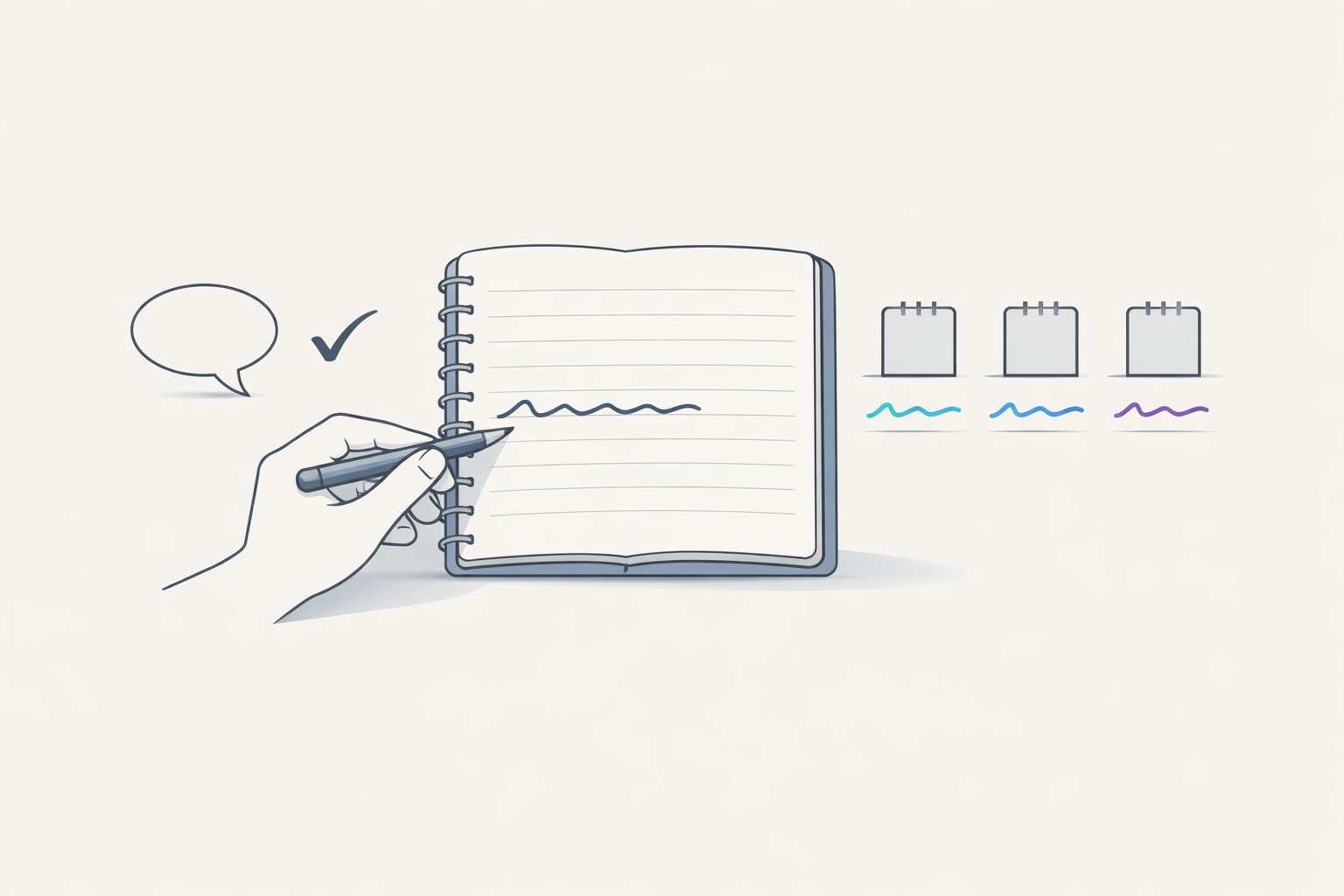
- Open the free voice mode and paste one standing instruction before you say anything. Say: “Answer me briefly, then stop me, name exactly one thing that was wrong in my last sentence, and give me the sentence a fluent speaker would use.”
- Talk for two minutes about something real from your day. Two minutes is the unit; the reasons sit in a two-minute daily routine.
- Take one correction, not five. Two-Minute Speaking, the app this site publishes, teaches one point per session by design: a session that hands back six fixes hands back none you can use tomorrow.
- Write one line in a plain notes file, named as a specific thing: “I drop the article before singular countable nouns.” Not “grammar”.
- Cross a line off only after you have used it correctly on three separate days. Separate days, not three times in one sitting.
Tip
Keep the standing instruction in your clipboard or a pinned note. The free session has no memory of your last one, so the instruction has to arrive with you every single time.
The honest warning: this works only if you keep the file, and most people stop by the second week. That is not a character flaw. It is precisely the labour that paid tools sell, and worth knowing before you buy one.
Four questions before you spend a month on a free tool
Run these four before you invest a month of evenings. They are about the bargain, not the technology.
- The cap question: what exactly runs out, and after how long? Find the answer on the pricing page before you sign up, not on day four.
- The correction question: does it stop you and name the error, or does it reply politely and move on?
- The memory question: come back tomorrow and say nothing about yesterday. Does yesterday’s mistake return on its own?
- The voice question: does the privacy page say what happens to your recordings, and is there a way to delete them?
The rule attached to the result is simple. If the tool fails the memory question, keep the error list yourself with the three-separate-days rule above, or the month is wasted. A tool that fails the voice question does not get your voice.
What a free app does with your voice
Any speaking tool has to turn your audio into text before it can correct anything. So a transcript of what you said exists on somebody’s server, at least briefly. That is true of every tool in this category, including ours.
So read the wording, not the reassurance. ELSA Speak’s privacy notice says it retains personal data “for as long as we deem it as reasonably necessary”, and that a deletion request may be denied in part (ELSA privacy notice). That is not a scandal; it is a normal policy, and exactly the sentence you want to read before you speak rather than after. Look for three things on any vendor’s page: whether recordings or transcripts are used to improve models, how long they are kept, and whether you can delete them.
Our own position sits on the same terms. Speech is transcribed so the correction can be produced, it is not shared with other learners and not used for advertising, and data can be deleted by emailing privacy@aienglishspeaking.app from your account address. The policy is the source for what happens to your recordings; hold it to the same reading you just gave ELSA’s.
Warning
A tool that will not tell you what happens to your recordings is a tool you should not speak into, free or paid. Silence on the privacy page is an answer.
When free is all you need
Some readers should not pay anything, and it is worth naming them. If you have not spoken English out loud in years, your problem is volume, not precision. Any speaking beats carefully corrected silence, and a free assistant supplies endless low-stakes talking. Correction matters later, once the words come out at all.
The same goes if your obstacle is nerves. More unpressured talking with something that cannot judge you is the treatment, and that is free; the mechanics are in English speaking anxiety. If you are not even sure a tool is what you need, start with why you understand English but cannot speak it, or with the no-tool methods in practise English speaking alone.
And if you genuinely keep a notebook and review it, the free route and the paid route differ mainly in effort. The honest flip comes at about two weeks: if you have kept the routine properly and the same named mistake keeps returning, that is a signal about the tool’s missing memory layer, not about you.
What Two-Minute Speaking gives you free
Two-Minute Speaking is the app this site publishes, so read this section knowing that. The free allowance is three full sessions, then one free session every week, for as long as you like, and your mistakes, your notebook and your progress map stay yours either way. Full access is a paid subscription; the yearly plan opens with a 7-day free trial, and a first payment carries a 14-day money-back guarantee. Current prices live on the pricing page rather than in this paragraph, because prices change and this article should not go stale.
Note
There is no separate download. The app runs at app.aienglishspeaking.app and can be added to the home screen on iPhone and Android; native apps are planned.
The plain limit: one session a week is not a daily habit, and the mastery rule needs separate days to do anything. The free tier shows you what a corrected loop feels like and lets you judge the correction style. It does not close your errors for you. That is the same trade every other tool here offers, stated in numbers you can check.
Questions people ask about free AI English practice
Can I practise English speaking with an AI without paying anything? Yes. A general assistant’s spoken mode and the capped free tiers of dedicated apps both let you talk out loud at zero cost, and some need no card. What you will not get free is a system that remembers your specific errors and returns them on later days, so plan to keep that list yourself.
Is ChatGPT voice mode good enough for English speaking practice? For talking volume, yes. For fixing errors, it will not stop you unless you tell it to, and it will not raise yesterday’s mistake tomorrow. No study we found measures it either way. Check OpenAI’s own pricing page for what the free plan currently includes, because the limits reported elsewhere disagree with each other.
What do free AI English apps do with my voice recordings? It varies, and the only reliable answer is the vendor’s own privacy page. ELSA Speak’s notice keeps personal data “for as long as we deem it as reasonably necessary” and allows deletion requests to be refused in part. No vendor page we read states plainly that its free tier is funded by training on learner speech.
Is Two-Minute Speaking free? Partly, and permanently so. You get three full sessions to begin with, then one free session every week for as long as you want it; full access is a paid subscription with a trial on the yearly plan. The figures that matter, including prices, are on the pricing page rather than here.
How long can I stay on a free plan before it stops helping? As long as your notes file survives. The free route stops helping the day you stop writing down the named mistake and bringing it back on separate days. If you have done that honestly for two weeks and the same error still returns, the tool has told you what it is missing.
If you want to see what a corrected session feels like before deciding anything, start with three free sessions with Two-Minute Speaking: they cost nothing and need no card. After that it is one free session a week, and full access is paid, which is exactly the bargain this article told you to check on every other tool too.
Leave a Reply